
Summary
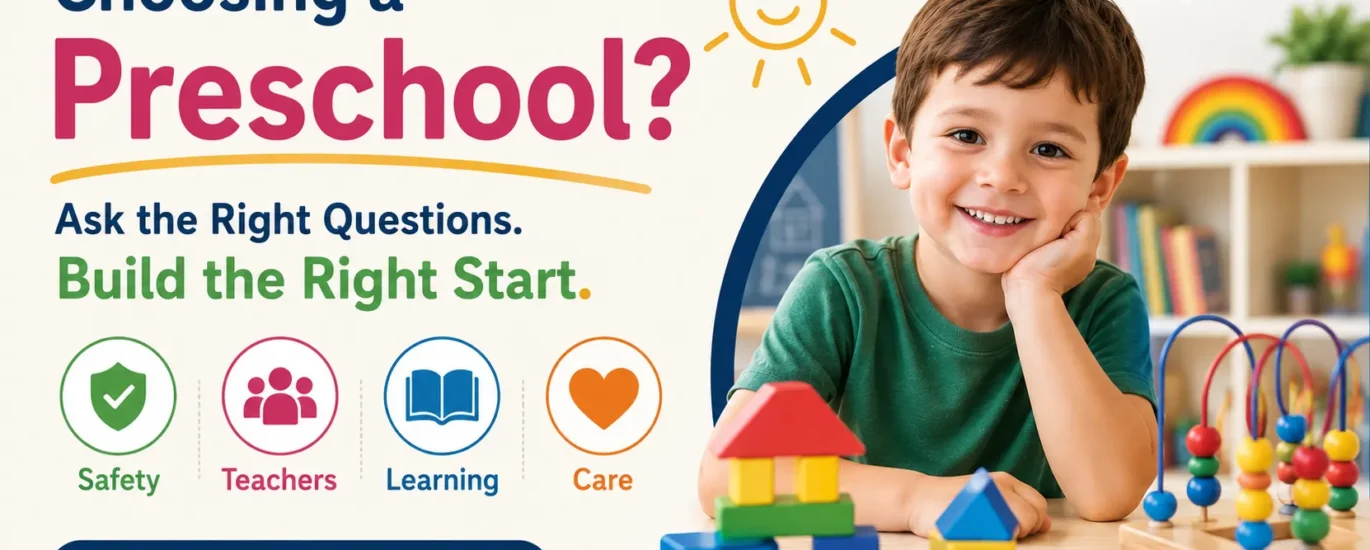
Choosing a preschool is one of the first major educational decisions many parents make for their children. For families searching for a preschool in Belmont, MA, the decision involves much more than finding a convenient location or selecting the first program with an available opening.
Parents should consider the complete preschool experience, including the classroom environment, teacher-child relationships, curriculum, safety procedures, communication, daily schedule, outdoor play, social-emotional development, tuition, enrollment requirements, and how well the program matches their child’s personality and developmental needs.
The right preschool should provide a safe, nurturing, engaging environment where children can develop communication skills, independence, curiosity, social relationships, confidence, and early academic foundations through developmentally appropriate experiences.
Massachusetts’ official preschool guidance emphasizes that young children learn by doing, that children develop at different rates, and that families are their children’s primary caregivers and educators. The state’s preschool standards also emphasize social-emotional development, self-management, relationships, initiative, curiosity, persistence, creativity, cooperative play, problem-solving, and other approaches to learning.
That means parents should look beyond questions such as “What letters will my child learn?” and ask broader questions such as:
- How do teachers interact with children?
- How does the school handle separation anxiety?
- What happens when a child has a difficult day?
- How much time do children spend playing?
- What does a typical day look like?
- How does the school communicate with families?
- What safety and licensing requirements does the program follow?
- What happens if my child needs additional support?
- Does the schedule work for our family?
- Will this environment help my child feel comfortable, confident, and curious?
This comprehensive guide explains the most important questions to ask before choosing a preschool in Belmont, MA, along with considerations for families comparing preschool options in nearby Arlington, MA.
Introduction: Choosing the Right Preschool in Belmont, MA
For many families, preschool represents a child’s first regular experience in a structured educational environment outside the home.
That can make the decision feel overwhelming.
Parents may find themselves comparing programs based on:
- Location
- Tuition
- Reviews
- School hours
- Curriculum
- Teacher qualifications
- Classroom size
- Outdoor space
- Activities
- Reputation
- Availability
All of these factors matter.
But they don’t all matter equally for every family.
A preschool that is perfect for one child may not be the best choice for another.
For example, a child who loves large group activities may thrive in a different environment from a child who needs a quieter classroom. A family looking for a full-day program may have very different priorities from a family seeking a half-day preschool. Parents of children who need additional developmental support may need to ask very different questions from families looking for a general early learning program.
The best approach is therefore not to ask:
“What is the best preschool in Belmont, MA?”
Instead, ask:
“What preschool is the best fit for my child and our family?”
That shift can make the entire decision-making process easier.
Why Asking the Right Questions Matters
A preschool website can tell you a lot.
But it cannot tell you everything.
A website may describe a program as:
- Caring
- Innovative
- Play-based
- Child-centered
- Creative
- Inclusive
- Educational
- Family-focused
These descriptions sound positive, but parents should ask for specific examples.
For instance, instead of asking:
“Is your program play-based?”
ask:
“Can you explain what a typical play-based morning looks like in your classroom?”
Instead of asking:
“Do you support social-emotional development?”
ask:
“How do teachers help a child who becomes frustrated, angry, or overwhelmed?”
Instead of asking:
“Is the program safe?”
ask:
“What are your procedures for child pickup, emergencies, injuries, illness, and supervision?”
Specific questions produce much more useful answers.
1. Is the Preschool Licensed or Approved?
This should be one of your first questions.
In Massachusetts, the Department of Early Education and Care (EEC) regulates licensed early education and care programs. EEC licenses or approves group, school-age, and family child care programs and provides information about licensing requirements and provider searches.
Ask:
- Is this program licensed by Massachusetts EEC?
- What type of license does the program have?
- Can I verify the program’s licensing information?
- Are there any current restrictions?
- Can parents review the program’s compliance history?
- What happens if parents have a licensing concern?
Massachusetts EEC notes that families can use its provider search tools to locate licensed programs and can contact the local EEC office to confirm licensing information or learn about license history and non-compliance findings.
This doesn’t mean licensing alone determines quality.
It means licensing should be one of the basic pieces of your due diligence.
2. What Are the Teachers’ Qualifications?
Teachers have an enormous influence on a child’s preschool experience.
Ask:
- What qualifications do lead teachers have?
- What early childhood education training have they completed?
- How much experience do they have?
- Do teachers receive ongoing professional development?
- How long have the current teachers worked at the preschool?
- Are teachers trained in first aid and CPR?
- How are substitute teachers selected?
Don’t only ask about degrees.
Experience, professional development, communication skills, patience, and the ability to understand children’s developmental needs are also important.
During a tour, pay attention to how teachers interact with children.
Do they listen?
Do they kneel down to the child’s level?
Do they respond patiently?
Do they encourage exploration?
Do children appear comfortable approaching them?
Those observations can be more revealing than a promotional brochure.
3. Do All Staff Members Complete Required Background Checks?
Safety should be non-negotiable.
Massachusetts EEC has specific Background Record Check requirements for child care programs. EEC states that all staff in group and school-age child care programs must complete the applicable background check requirements.
EEC’s background record check system can include checks involving Massachusetts criminal records, child welfare records, sex offender information, and fingerprint-based state and national criminal history checks, depending on the applicable requirements.
Parents can ask:
- Do all staff members complete required background checks?
- How frequently are background checks renewed?
- Do substitutes and volunteers undergo appropriate screening?
- What happens when outside specialists work with children?
- Who is permitted to have unsupervised access to children?
You don’t need to ask staff for private information about individual employees.
Instead, ask about the school’s process and compliance.
4. What Is the Teacher-to-Child Ratio?
A smaller group doesn’t automatically guarantee a better preschool.
However, classroom staffing can affect:
- Supervision
- Individual attention
- Classroom management
- Teacher-child relationships
- Safety
- Learning opportunities
Ask:
“How many children are typically in each classroom, and how many educators are present?”
Also ask:
“What happens when a teacher is absent?”
A preschool may have a strong ratio under normal circumstances but operate differently when employees are sick or absent.
Understanding the substitute and staffing plan can provide additional insight.
Massachusetts requires licensed programs to maintain appropriate educator-to-child ratios.
5. What Does a Typical Day Look Like?
This is one of the most important questions to ask.
Request a sample daily schedule.
It might include:
- Arrival
- Free choice
- Group activities
- Story time
- Art
- Snack
- Outdoor play
- Music
- Movement
- Small-group activities
- Lunch
- Rest or quiet time
- Cleanup
- Departure
Ask:
“How much of the day is teacher-directed and how much is child-directed?”
A strong preschool experience generally shouldn’t feel like a miniature elementary school.
Massachusetts’ preschool guidance emphasizes that young children learn by doing and recognizes play, exploration, and developmentally appropriate learning experiences as important parts of early education.
6. How Much Time Do Children Spend Playing?
Play isn’t simply “free time.”
For young children, play can support:
- Language
- Creativity
- Social development
- Problem-solving
- Motor development
- Emotional development
- Cooperation
- Decision-making
- Imagination
Massachusetts’ preschool standards explicitly include cooperative play, initiative, curiosity, engagement, persistence, creativity, problem-solving, and social-emotional development.
Ask:
- How much free play is included?
- What materials are available?
- Do teachers participate in children’s play?
- Is pretend play encouraged?
- Are children allowed to choose activities?
- How does the school balance structured learning and exploration?
7. What Curriculum Does the Preschool Follow?
Don’t be impressed by a curriculum simply because it has a sophisticated name.
Ask what children actually do.
Questions include:
- What curriculum or learning framework do you use?
- How is the curriculum adapted for different ages?
- How do teachers plan activities?
- How do you measure children’s progress?
- How much emphasis is placed on play?
- How are literacy and math introduced?
- How are science and creative activities incorporated?
- How do teachers support social-emotional learning?
Massachusetts EEC describes its learning standards and curriculum guidelines as research-based resources designed to support children’s social, emotional, and academic development.
8. How Does the Preschool Support Social-Emotional Development?
This question deserves special attention.
Preschoolers are still learning how to:
- Share
- Take turns
- Communicate feelings
- Handle disappointment
- Solve disagreements
- Ask for help
- Calm themselves
- Build friendships
Massachusetts’ preschool standards specifically address self-management, relationship skills, responsible decision-making, initiative, curiosity, engagement, persistence, cooperative play, creativity, and problem-solving.
Ask:
“What happens when two children want the same toy?”
“How do teachers respond to tantrums?”
“How do you help children identify emotions?”
“How do you teach conflict resolution?”
The answers can reveal a great deal about the school’s philosophy.
9. How Do Teachers Handle Challenging Behavior?
Every preschool will encounter challenging behavior.
Children may:
- Cry
- Refuse to participate
- Hit
- Grab toys
- Yell
- Become frustrated
- Have tantrums
- Struggle with transitions
The important question is not whether challenging behavior occurs.
It is how adults respond to it.
Ask:
- What is your behavior guidance philosophy?
- Do you use positive reinforcement?
- How do you teach children alternative behaviors?
- How do you communicate behavior concerns with parents?
- What happens when a behavior becomes repetitive?
- How do you protect other children while supporting the child who is struggling?
Avoid programs that cannot clearly explain their behavior guidance approach.
10. How Do You Handle Separation Anxiety?
Starting preschool can be emotional.
Some children walk into the classroom happily.
Others cry, cling to their parents, or refuse to enter.
Ask:
- How do you handle difficult drop-offs?
- Can parents stay briefly during the transition?
- What does the first week look like?
- How do teachers comfort children?
- How do parents receive updates after drop-off?
- What happens if a child continues crying?
A good preschool should have a thoughtful transition strategy.
11. What Happens If My Child Has a Difficult Day?
This is an excellent question because it tests how the school thinks about children.
Ask:
“What happens when a child is overwhelmed, tired, frustrated, or simply having a bad day?”
You want to hear about:
- Patience
- Observation
- Support
- Communication
- Individualization
- Consistent routines
- Collaboration with parents
You don’t want to hear that every problem is immediately treated as disobedience.
12. How Does the School Support Different Developmental Needs?
Children develop at different rates.
Massachusetts’ preschool guidance explicitly states that children show individual differences in development.
Ask:
- How do you support children who learn differently?
- What happens if a teacher notices a developmental concern?
- How are parents informed?
- Do you collaborate with specialists?
- Can children receive speech or occupational therapy services when appropriate?
- How are classroom activities adapted?
For families who already have concerns about development, this question should be a priority.
13. Does the Preschool Offer an Inclusive Environment?
Ask what inclusion means at that specific school.
Don’t settle for a simple “yes.”
Ask:
- How are activities adapted?
- How do teachers support different learning styles?
- Are children encouraged to work together?
- What specialists are available?
- How are families involved?
For example, Belmont Public Schools operates an integrated preschool program for children ages 3–5 that includes children who require special education programming alongside typically developing neighborhood children. The district describes the program as using developmentally appropriate, language-rich activities supporting communication, social, emotional, cognitive, and motor development.
This is a useful example of why parents should research the specific structure of each preschool, rather than assuming all programs operate the same way.
14. What Is the Preschool’s Approach to Early Literacy?
Ask:
- How are books incorporated?
- Do teachers read aloud every day?
- Are children encouraged to tell stories?
- Is writing introduced through developmentally appropriate activities?
- Do children explore letters and sounds?
- Are children encouraged to draw and communicate ideas?
Remember that preschool literacy should not simply mean worksheets.
Language-rich conversations, storytelling, songs, books, dramatic play, drawing, and meaningful communication can all contribute to early literacy.
Massachusetts’ preschool guidelines identify language as an important developmental area and emphasize the relationship between language skills and later academic success.
15. How Is Early Math Taught?
Ask:
- Do children count objects?
- Do they sort materials?
- Do they explore patterns?
- Do they learn shapes?
- Do they compare quantities?
- Do teachers use everyday activities to introduce mathematical thinking?
A preschool shouldn’t need to turn three-year-olds into mathematicians.
Early math should be meaningful and age appropriate.
For example:
“Which tower is taller?”
“How many blocks do we need?”
“Can you find two red objects?”
These simple experiences can introduce mathematical concepts naturally.
16. Is There Outdoor Play Every Day?
Outdoor play can support:
- Physical development
- Gross motor skills
- Social interaction
- Exploration
- Confidence
- Imagination
- Stress regulation
Ask:
- How often do children go outside?
- Is outdoor play offered year-round?
- What happens during bad weather?
- Is there an indoor movement area?
- Is the outdoor space secured?
- What equipment is available?
Also ask whether outdoor play is regularly scheduled or only offered when convenient.
17. What Is the Indoor Classroom Environment Like?
During your tour, look beyond decoration.
Ask yourself:
Can children actually use the environment?
Look for:
- Books
- Blocks
- Art materials
- Pretend-play materials
- Puzzles
- Manipulatives
- Child-sized furniture
- Accessible materials
- Quiet areas
- Creative spaces
A classroom doesn’t have to be expensive or elaborate.
It should be:
Safe + organized + engaging + age appropriate.
18. Is There a Quiet or Calm Area?
Some children need a break from stimulation.
Ask:
- Is there a quiet space?
- Can children use it when overwhelmed?
- How do teachers help children calm down?
- Is the space supervised?
A calm area should not be used as punishment.
It should help children regulate emotions.
19. What Are the Preschool’s Safety Procedures?
Ask specific questions about:
Arrival
- How are children signed in?
Pickup
- Who is allowed to collect a child?
- How is identity verified?
Emergencies
- What happens during a fire?
- What happens during severe weather?
- What happens if the building must be evacuated?
Injuries
- How are parents notified?
- When is medical attention sought?
Illness
- When must children stay home?
- How are contagious illnesses handled?
Massachusetts child-care licensing requirements cover areas including health, safety, supervision, staffing, facilities, behavior guidance, and parent responsibilities.
20. What Is the Sick-Child Policy?
Children get sick.
Ask:
- What symptoms require staying home?
- When can a child return?
- What happens if a child becomes sick during the day?
- Is there a separate area for a sick child while waiting for pickup?
- How are parents contacted?
This policy matters not only for your child but for the health of the entire classroom.
21. What Are the Preschool’s Medication Policies?
If your child needs medication, ask:
- Can staff administer medication?
- What authorization is required?
- How is medication stored?
- Who can administer it?
- What happens during field trips or off-site activities?
Ask for the written policy rather than relying only on verbal explanations.
22. What Are the Food and Allergy Policies?
Ask:
- Are snacks provided?
- Can parents provide food?
- How are food allergies handled?
- Is the classroom nut-aware or nut-free?
- How are allergy emergencies managed?
- Can children bring food from home?
- How are dietary restrictions documented?
If your child has a food allergy or dietary restriction, discuss it before enrollment.
23. How Does the Preschool Handle Toileting?
Different programs have different policies.
Ask:
- Does my child need to be toilet trained?
- Can teachers help with toileting?
- What happens after an accident?
- Who provides extra clothing?
- How is hygiene maintained?
- How are parents notified?
Never assume that another preschool’s policy applies to the program you’re considering.
24. What Is the Daily Schedule?
Ask for the actual schedule.
Find out:
- Start time
- Arrival window
- Snack
- Outdoor play
- Lunch
- Rest
- Group activities
- Free play
- Pickup
Then ask:
“How flexible is the schedule?”
Young children don’t always operate perfectly according to a clock.
A good classroom can have structure while still responding to children’s needs.
25. Is the Program Half-Day or Full-Day?
This is a major family decision.
Half-day preschool may work well for:
- Children new to group settings
- Families wanting a gradual transition
- Parents with flexible schedules
- Children who become tired easily
Full-day preschool may work well for:
- Working families
- Children comfortable with longer group experiences
- Families wanting a longer educational schedule
- Children who benefit from extended play and social interaction
Neither is automatically better.
The right schedule depends on your child and family.
26. Does the Preschool Offer Before- or After-School Care?
Never assume that preschool automatically includes extended care.
Ask:
- Is before-care available?
- Is after-care available?
- What are the additional fees?
- Is it operated by the preschool?
- Are children moved to another room?
- Is transportation involved?
This can be especially important for working parents.
27. What Are the Tuition and Additional Costs?
Tuition is rarely the only expense.
Ask about:
- Registration fees
- Deposits
- Materials fees
- Activity fees
- Extended-care fees
- Field-trip fees
- Meals
- Late pickup charges
- Withdrawal policies
- Refund policies
Ask for the complete cost in writing.
A lower monthly tuition can become more expensive if there are significant additional charges.
28. Are Scholarships or Financial Assistance Available?
If tuition is a concern, ask directly.
Questions include:
- Do you offer financial assistance?
- Are tuition discounts available?
- Are payment plans available?
- Are there eligibility requirements?
- What documentation is required?
- Are deposits refundable?
Don’t assume that financial assistance is unavailable simply because it isn’t prominently displayed on the website.
29. What Is the Enrollment Process?
Preschool enrollment can be competitive.
Ask:
- When does registration open?
- Is there a waiting list?
- Is admission first-come, first-served?
- Is there a lottery?
- Are there residency requirements?
- Are there age requirements?
- Is there a screening process?
- What documents are required?
- When must the deposit be paid?
For example, Belmont Public Schools’ integrated preschool has specific eligibility and peer-model enrollment procedures, including age requirements and a screening process for typically developing neighborhood children.
The lesson for parents is simple:
Understand the enrollment process early.
30. Does the Preschool Have a Waiting List?
If the answer is yes, ask:
- How long is the typical wait?
- How are openings offered?
- Is there a priority system?
- Do I need to reapply each year?
- Is there a deposit?
- Can I remain on multiple preschool waitlists?
Never assume that submitting an inquiry means your child is officially on a waiting list.
Get confirmation.
31. What Are the Age Requirements?
Age requirements can vary by program.
Ask:
- What is the minimum age?
- What is the maximum age?
- Is the age calculated by the first day of school?
- Is there a September cutoff?
- Does the program have separate classrooms by age?
For example, Belmont’s public integrated preschool page currently describes its program for children ages 3–5, with specific eligibility rules for neighborhood peer models.
32. What Does the Preschool Require for Registration?
Ask whether you need:
- Birth certificate
- Proof of residency
- Health records
- Immunization records
- Physical examination documentation
- Emergency contacts
- Parent identification
- Authorized pickup information
- Developmental information
Ask for a complete enrollment checklist.
33. How Does the Preschool Communicate With Parents?
Strong family communication can make a major difference.
Ask:
- Do teachers send daily updates?
- Is there a parent communication app?
- Are photos shared?
- Are newsletters provided?
- Are parent-teacher conferences scheduled?
- How are urgent concerns communicated?
- Can parents contact teachers directly?
Also ask:
“How quickly should parents expect a response to a non-emergency question?”
Clear expectations prevent misunderstandings.
34. How Often Are Parent-Teacher Conferences Held?
Ask:
- Are conferences scheduled?
- How often?
- Are written progress reports provided?
- How are developmental observations shared?
- Can parents request an additional meeting?
You want a preschool that views parents as partners.
Massachusetts’ preschool guidance explicitly identifies families as children’s primary caregivers and educators.
35. How Does the Preschool Track Child Development?
Ask:
- Do teachers use observations?
- Are developmental milestones tracked?
- Are portfolios maintained?
- Are samples of children’s work collected?
- How is progress communicated?
The purpose shouldn’t be to turn preschool into standardized testing.
Instead, assessment should help teachers understand how children are developing and how classroom experiences can support them.
36. How Does the Preschool Support Language Diversity?
Belmont and Arlington are diverse communities, and families may speak different languages at home.
Ask:
- How does the school support multilingual children?
- Can parents communicate with staff in their preferred language?
- Are translated materials available?
- Are home languages respected in the classroom?
- How are children supported while developing English?
A child’s home language should be treated as an important part of family identity and communication.
37. What Happens If My Child Needs Speech or Occupational Therapy?
Ask whether the preschool:
- Collaborates with therapists
- Allows outside providers when permitted
- Communicates with families
- Supports individualized strategies
- Adjusts classroom activities
This is especially important if your child already receives services.
38. How Does the Preschool Handle Transitions?
Transitions can include:
- Home → school
- Free play → cleanup
- Classroom → outdoor play
- Activity → activity
- Preschool → kindergarten
Ask:
“How do teachers prepare children for transitions?”
Look for:
- Visual schedules
- Warnings before changes
- Songs
- Consistent routines
- Verbal reminders
- Individual support
39. How Does the Preschool Prepare Children for Kindergarten?
Ask:
- How do you build independence?
- How do children practice following routines?
- How are early literacy skills developed?
- How are early math concepts introduced?
- How do children practice group participation?
- How do you support emotional readiness?
Kindergarten readiness is much broader than reading and writing.
Children also need:
- Independence
- Communication
- Social skills
- Listening
- Self-management
- Problem-solving
- Confidence
These areas align with Massachusetts’ social-emotional and approaches-to-learning standards.
40. Can I Visit the Preschool Before Enrolling?
Whenever possible, visit.
Don’t choose a preschool solely from:
- Google reviews
- Website photographs
- Advertisements
Ask to see the actual environment.
During the visit, observe:
Children
Do they seem:
- Comfortable?
- Curious?
- Engaged?
- Safe?
Teachers
Do they:
- Listen?
- Encourage?
- Comfort?
- Interact?
Environment
Is it:
- Clean?
- Organized?
- Safe?
- Child-friendly?
- Interesting?
What Parents Should Watch During a Preschool Tour
Sometimes the things you notice without asking questions are the most useful.
Positive signs
Look for:
- Teachers speaking respectfully to children
- Children freely exploring materials
- Teachers getting down to children’s level
- Age-appropriate activities
- Visible books and learning materials
- Calm transitions
- Opportunities for movement
- Children asking teachers for help comfortably
Possible concerns
Pay attention if you see:
- Children left without adequate supervision
- Teachers frequently using harsh language
- Very little child-teacher interaction
- Excessive worksheet use
- Lack of age-appropriate materials
- Unsafe or poorly maintained spaces
- Staff unable to explain basic policies
One moment does not necessarily define an entire program.
Use your observations alongside the school’s answers and documentation.
Belmont, MA Preschool Considerations
Families searching for preschool in Belmont, MA have several types of programs to investigate, including public integrated preschool offerings and other early childhood programs.
Belmont Public Schools currently describes an integrated preschool serving children ages 3–5, with classrooms designed to include children requiring special education programming alongside typically developing peer models. The district states that classrooms can enroll up to 15 children, with seven children with identified special needs and eight typically developing peer models.
The district also states that its preschool curriculum aligns with Massachusetts early childhood program learning standards and includes language-rich, developmentally appropriate activities supporting communication, social, emotional, cognitive, and motor development.
Parents considering this or another preschool should verify current information directly with the provider because:
- Eligibility can change
- Tuition can change
- Enrollment can change
- Program schedules can change
- Waiting lists can change
- Staffing can change
For the 2026–2027 school year, Belmont Public Schools currently lists specific preschool tuition and payment information on its preschool page, demonstrating why parents should always check the current year’s official information rather than relying on older articles or directories.
What About Preschool in Arlington, MA?
Families living near Belmont and Arlington may reasonably compare programs in both communities.
Arlington Public Schools currently operates Menotomy Preschool, an integrated preschool serving children from age 3 through kindergarten-entry age, with or without special needs. The program describes multi-age classrooms, specialized teaching staff, individualized instruction, and developmentally appropriate activities.
Arlington’s current enrollment information also states that new-family enrollment is determined through a lottery and that the 2026–2027 lottery is closed, with a waitlist available.
Menotomy Preschool also states that it is an integrated preschool rather than a traditional preschool or daycare and that it does not offer before- or after-school childcare.
This is an important lesson for parents searching for preschool near Arlington, MA:
Don’t assume that a preschool program provides the same services as a daycare program.
Always ask about:
- Hours
- Eligibility
- Childcare coverage
- Before-care
- After-care
- Enrollment
- Tuition
- Transportation
- Program structure
Belmont vs. Arlington: Which Preschool Location Is Better?
There is no universal winner.
For families deciding between a preschool in Belmont, MA and a preschool in Arlington, MA, consider:
| Factor | What Parents Should Compare |
|---|---|
| Location | Distance from home/work |
| Schedule | Start and end times |
| Tuition | Total annual cost |
| Eligibility | Residency and age requirements |
| Enrollment | Lottery, application, or open enrollment |
| Curriculum | Learning approach |
| Teachers | Qualifications and experience |
| Class size | Children per classroom |
| Staffing | Educator-to-child ratio |
| Outdoor play | Frequency and facilities |
| Extended care | Before/after-school availability |
| Communication | Parent updates and conferences |
| Support | Developmental and special education services |
| Environment | Classroom atmosphere |
| Child fit | Personality and individual needs |
The best program is the one that fits your child’s needs and your family’s practical requirements.
15 Questions to Take With You on Your Preschool Tour
If you don’t want to carry a huge checklist, start with these 15:
- What does a typical day look like?
- What is your teacher-to-child ratio?
- What qualifications and training do teachers have?
- How do you handle challenging behavior?
- How do you support separation anxiety?
- How much outdoor play do children receive?
- How much free play is included?
- What curriculum or learning framework do you use?
- How do you communicate with parents?
- What are your safety and emergency procedures?
- What is your illness policy?
- What are your toileting requirements?
- What is the complete cost, including additional fees?
- How does enrollment and the waitlist work?
- What makes your program different from other preschools?
That final question can be particularly revealing.
Listen carefully to the answer.
Questions to Ask Yourself After the Tour
Once you leave, don’t immediately compare prices.
Ask yourself:
Did my child seem comfortable?
Did teachers appear genuinely engaged?
Did the classroom feel calm but active?
Were children encouraged to explore?
Did teachers speak respectfully to children?
Did the school answer difficult questions honestly?
Can I imagine my child spending several hours here?
Does the schedule work for our family?
Can we realistically afford the total cost?
Does the program align with our parenting values?
Does the preschool seem prepared to support my child’s individual needs?
Your answers can be more important than a school’s marketing language.
Preschool Selection Scorecard
You can also score each preschool from 1 to 5.
| Category | Score 1–5 |
|---|---|
| Teacher-child interaction | ___ |
| Safety | ___ |
| Licensing/compliance | ___ |
| Curriculum | ___ |
| Play opportunities | ___ |
| Outdoor activities | ___ |
| Social-emotional support | ___ |
| Communication | ___ |
| Classroom environment | ___ |
| Schedule | ___ |
| Tuition/value | ___ |
| Enrollment availability | ___ |
| Child’s comfort | ___ |
| Family fit | ___ |
Then compare programs objectively.
This can prevent one impressive feature from overshadowing several important weaknesses.
Red Flags Parents Should Not Ignore
No preschool is perfect.
However, parents should take certain concerns seriously.
Red Flag #1: Staff Avoid Basic Questions
If the school cannot clearly explain:
- Safety
- Tuition
- Enrollment
- Staffing
- Curriculum
- Behavior policies
ask why.
Red Flag #2: Teachers Seem Disengaged
Watch interactions.
If adults consistently ignore children or communicate harshly, take note.
Red Flag #3: Excessive Academic Pressure
Preschool should not feel like a high-pressure test-preparation environment.
Red Flag #4: Very Little Play
Play is an essential part of young children’s learning.
Red Flag #5: No Clear Emergency Procedures
Schools should be able to explain their basic safety procedures.
Red Flag #6: Unclear Staff Screening
Ask how background checks and staff requirements are handled.
Red Flag #7: Poor Communication
If the school takes days to answer basic enrollment questions, consider what communication may look like after your child enrolls.
Red Flag #8: Unexplained Fees
Ask for the total cost in writing.
How Early Should You Start Looking for Preschool in Belmont, MA?
There is no single universal application timeline because every program operates differently.
However, parents should start researching well before the desired start date.
Starting early gives you time to:
- Compare programs
- Schedule tours
- Understand eligibility
- Join waitlists
- Review tuition
- Gather documents
- Consider multiple options
- Make backup plans
This is particularly important for programs that use lotteries or have limited capacity.
Belmont and Arlington both have examples of preschool enrollment processes where availability and application timing matter.
Should You Apply to More Than One Preschool?
If your preferred programs allow it, having several options can reduce stress.
Consider creating three categories:
First Choice
The program that best matches your priorities.
Strong Alternative
A program that meets most of your needs.
Backup
A program that works practically if your first options aren’t available.
Don’t select a backup randomly.
Research it with the same seriousness.
How Much Should Location Matter?
Location matters—but it shouldn’t be the only factor.
A preschool five minutes away may be convenient.
But if another preschool fifteen minutes away has:
- Better hours
- Better child-teacher fit
- Better communication
- A stronger environment
- More appropriate support
the additional travel might be worthwhile.
Consider your actual daily routine.
Ask:
“Can we realistically make this commute every morning and afternoon?”
How Much Should Tuition Matter?
Cost matters.
Families have different budgets, and affordability is a legitimate part of choosing a preschool.
But don’t compare tuition alone.
Compare:
Total annual cost ÷ actual services received.
Consider:
- Hours
- Number of days
- Extended care
- Meals
- Activities
- Transportation
- Additional fees
- Registration charges
A program that looks inexpensive may cost more once additional services are added.
What Makes a High-Quality Preschool?
A strong preschool typically combines several elements:
Safe environment
Children should be appropriately supervised and protected.
Responsive teachers
Adults should listen and respond to children.
Developmentally appropriate learning
Activities should match children’s developmental levels.
Play and exploration
Children should have meaningful opportunities to play.
Social-emotional development
Children should learn how to interact, communicate, and manage emotions.
Family partnership
Parents should be treated as important partners.
Individual support
Children should not be expected to develop identically.
These principles closely align with Massachusetts’ preschool guidance and quality early education framework.
The Most Important Question: Is It Right for Your Child?
After asking every practical question, ask one final question:
“Can I picture my child feeling safe, respected, curious, and happy here?”
Your child’s personality matters.
Think about whether your child:
- Needs lots of movement
- Prefers small groups
- Loves pretend play
- Needs quiet time
- Is highly social
- Is slow to warm up
- Enjoys structure
- Needs additional support
The best preschool doesn’t try to make every child behave exactly the same.
It creates an environment where different children can learn and grow.
Frequently Asked Questions About Choosing a Preschool in Belmont, MA
1. What questions should I ask before choosing a preschool in Belmont, MA?
Parents should ask about licensing, teacher qualifications, teacher-to-child ratios, curriculum, daily schedules, outdoor play, safety, behavior guidance, communication, tuition, enrollment, toileting, illness policies, and support for individual developmental needs.
2. How do I choose the best preschool in Belmont, MA?
Start by identifying your family’s priorities, then compare several programs based on safety, teachers, curriculum, classroom environment, schedule, cost, communication, enrollment requirements, and your child’s individual needs.
3. What should I look for during a preschool tour?
Observe teacher-child interactions, children’s behavior, classroom organization, safety, available materials, opportunities for play, outdoor access, and how teachers respond to children’s needs.
4. Is preschool in Belmont, MA licensed?
Many early education programs fall under Massachusetts Department of Early Education and Care licensing requirements, but parents should verify the specific program’s licensing status directly. Massachusetts provides a provider search and licensing information through EEC.
5. What is the teacher-to-child ratio for preschool?
The applicable ratio depends on the type of licensed program and classroom structure. Parents should ask each preschool about its actual classroom size and staffing and verify that the program meets applicable Massachusetts requirements.
6. What qualifications should preschool teachers have?
Ask about early childhood education credentials, experience, professional development, CPR and first-aid training, and ongoing training. Also observe how teachers interact with children.
7. What curriculum should a preschool in Belmont use?
There is no single curriculum that is automatically best for every child. Look for a developmentally appropriate approach that supports language, literacy, early math, social-emotional development, physical development, creativity, play, curiosity, and problem-solving.
8. How important is outdoor play in preschool?
Outdoor play can support physical development, social interaction, exploration, movement, and creativity. Ask how often children go outside and what alternatives are available during poor weather.
9. Should preschool be academic or play-based?
A high-quality preschool can incorporate early academic learning through developmentally appropriate play, exploration, conversation, stories, hands-on activities, and teacher-guided experiences.
10. How should a preschool handle tantrums?
Ask about the school’s behavior guidance philosophy. Ideally, teachers should use developmentally appropriate strategies that help children understand emotions, develop self-regulation, communicate needs, and solve problems.
11. What if my child has separation anxiety?
Ask how the preschool handles transitions and whether teachers have a consistent drop-off strategy. Some children need more time and support before becoming comfortable.
12. Does my child need to be potty trained?
This varies by program. Ask the preschool about its specific toileting requirements before enrollment.
13. How much does preschool cost in Belmont, MA?
Tuition varies considerably by program, schedule, age group, and services. Ask for the complete annual cost, including registration fees, deposits, extended care, meals, activities, and other charges.
14. How early should I apply for preschool in Belmont?
Start researching early because some programs have limited availability, application windows, screenings, lotteries, or waitlists. Check each program’s current enrollment schedule.
15. Can I compare preschools in Belmont and Arlington?
Yes. Families near the Belmont-Arlington area may reasonably compare programs in both communities. Consider commute, eligibility, schedule, tuition, availability, program philosophy, and child fit.
16. What is an integrated preschool?
An integrated preschool brings together children with and without identified disabilities or special educational needs in an inclusive classroom environment. Belmont and Arlington both have public examples of integrated preschool programming.
17. How does Massachusetts regulate preschool and child care?
Massachusetts EEC establishes licensing requirements for applicable early education and care programs, including requirements related to staffing, safety, supervision, health, background checks, and program operation.
18. What should I ask about preschool safety?
Ask about child pickup procedures, emergency plans, supervision, staff background checks, illness procedures, injury reporting, medication administration, outdoor safety, and authorized visitors.
19. What should I ask about parent communication?
Ask how often parents receive updates, how teachers communicate concerns, whether conferences are offered, what technology is used, and who parents should contact with questions.
20. What is the most important factor when choosing preschool?
There isn’t one universal factor. Safety, responsive teachers, developmentally appropriate learning, family communication, schedule, affordability, and your child’s individual fit should all be considered together.
Final Preschool Selection Checklist
Before making your final decision, make sure you can answer the following:
Program
- ☐ Is the program licensed or appropriately approved?
- ☐ What age groups are accepted?
- ☐ What are the enrollment requirements?
- ☐ Is there a waiting list?
- ☐ Is there a lottery?
Teachers
- ☐ What qualifications do teachers have?
- ☐ What is staff turnover like?
- ☐ What ongoing training do educators receive?
- ☐ What happens when a teacher is absent?
Classroom
- ☐ What is the teacher-to-child ratio?
- ☐ What does the classroom look like?
- ☐ Are materials accessible?
- ☐ Is there a quiet space?
- ☐ Is the classroom clean and safe?
Learning
- ☐ What curriculum is used?
- ☐ How much play is included?
- ☐ How is literacy introduced?
- ☐ How is early math introduced?
- ☐ How are social-emotional skills supported?
Outdoor
- ☐ How often do children go outside?
- ☐ Is outdoor space safe?
- ☐ What happens in bad weather?
Health and Safety
- ☐ What are the illness policies?
- ☐ How are allergies handled?
- ☐ How are medications handled?
- ☐ What are the emergency procedures?
- ☐ How does pickup authorization work?
Family
- ☐ How do teachers communicate with parents?
- ☐ Are conferences offered?
- ☐ Are parents involved in the learning process?
Cost
- ☐ What is tuition?
- ☐ Are there registration fees?
- ☐ Is there a deposit?
- ☐ Are there additional activity fees?
- ☐ Is extended care available?
- ☐ Are payment plans or financial assistance available?
Child Fit
- ☐ Does my child seem comfortable?
- ☐ Does my child enjoy the environment?
- ☐ Does the program fit my child’s personality?
- ☐ Can the program support my child’s developmental needs?
- ☐ Does the preschool align with our family’s values?
Conclusion: Choosing the Right Preschool in Belmont, MA
Choosing a preschool in Belmont, MA is about much more than finding an open spot.
It is about finding an environment where your child can begin developing the skills, relationships, confidence, independence, and curiosity that will support future learning.
The right preschool should make parents feel comfortable asking questions.
It should be willing to explain its policies.
It should have a clear approach to safety.
It should employ educators who understand young children.
It should provide developmentally appropriate learning opportunities.
It should allow children to play, explore, communicate, create, move, and build relationships.
And perhaps most importantly, it should recognize that every child develops differently.
Massachusetts’ official preschool guidance emphasizes individual differences, learning through doing, interconnected developmental areas, and the important role of families.
That philosophy provides a useful foundation for parents evaluating any preschool.
When you visit a potential preschool, don’t be afraid to ask difficult questions.
Ask about:
Safety.
Teachers.
Classrooms.
Curriculum.
Play.
Behavior.
Outdoor time.
Communication.
Tuition.
Enrollment.
Developmental support.
Your child’s individual needs.
Then take time to observe.
Watch how teachers speak to children.
Watch whether children seem engaged.
Look at the classroom.
Listen to how staff answer your questions.
Think about whether the schedule works for your family.
And most importantly, consider whether your child could feel comfortable and confident in that environment.
For families in Belmont, it can also be worthwhile to compare appropriate programs in nearby Arlington when the location, schedule, eligibility, or program structure makes that practical. Arlington’s public preschool offerings, for example, have their own eligibility, enrollment, scheduling, and childcare limitations that parents should investigate separately.
There may not be one universally “best” preschool.
There is, however, a preschool that may be a better fit for your child.
Take the time to ask the right questions, visit your top choices, compare the answers carefully, and choose the environment where your child has the best opportunity to feel safe, supported, curious, connected, and ready to learn.