

Summary
Finding a safe and caring day care is one of the most important decisions a family can make. Parents looking for child care in Arlington, MA, or Belmont, MA, need to consider much more than location, tuition, and availability. The right program should provide appropriate supervision, qualified and responsive educators, a safe physical environment, clear health and emergency procedures, positive relationships, and activities suited to each child’s age and developmental needs.
The search can feel overwhelming because families may need to compare center-based child care, family child care homes, preschool programs, and school-age care. These options can differ in schedules, enrollment requirements, staffing, educational approaches, and costs.
A good starting point is to verify the program’s licensing or authorization status using the official Massachusetts Child Care Search tool. The Massachusetts Department of Early Education and Care (EEC) explains that families can contact the appropriate regional office if a program does not appear in search results or if they need information about licensing history, noncompliance findings, or restrictions. Source: Massachusetts EEC.
After checking the available records, schedule a visit. Observe how educators interact with children, how children are supervised, whether classrooms and play areas appear appropriate, and how staff explain their policies. Ask about background checks, educator training, staff-to-child ratios, safe sleep, allergies, medication, emergency plans, parent communication, tuition, and enrollment agreements.
Families in Arlington and Belmont should also distinguish between full-day child care and school-based preschool. For example, Arlington’s Menotomy Preschool is an integrated public preschool program for children ages three through kindergarten-entry age, and it does not provide before- or after-school child care. Belmont Public Schools also offers an integrated preschool program with its own eligibility and schedule. These programs may be valuable options for some families, but parents should confirm whether their hours and services meet their needs.
This guide explains how to research providers, assess safety, recognize caring educators, compare local options, understand fees, prepare for a tour, and make a well-informed decision for your family.
Introduction: Why Finding Safe and Caring Child Care Matters
For many families, day care is an important part of everyday life. It may allow parents to work, attend school, manage family responsibilities, or give their children opportunities to learn and socialize with peers.
However, choosing a child care provider involves placing considerable trust in other adults. Parents need confidence that their child will be supervised, treated respectfully, protected from preventable hazards, and supported emotionally throughout the day.
A welcoming website, colorful classroom, attractive playground, or positive online review can be useful, but none of these features alone establishes that a program is suitable for your child. The most important details often involve everyday practices that parents cannot judge from a photograph.
For example:
- How does the program account for every child during transitions?
- What happens when a teacher is absent?
- How are authorized pickup arrangements verified?
- What procedures are followed when a child is injured or becomes ill?
- How do educators respond to crying, conflict, or separation anxiety?
- What happens if a child has a food allergy or requires medication?
- How does the program communicate with parents about concerns?
- Are policies documented clearly and applied consistently?
These questions matter whether you are looking for infant day care, toddler care, preschool, or school-age care.
Families in Arlington and Belmont may have additional practical considerations, including commuting, parking, work schedules, school calendars, and the difference between a preschool schedule and full-day child care.
The goal is not to find a program that promises a completely risk-free environment—no setting can guarantee that. The goal is to identify a provider that takes its responsibilities seriously, follows applicable requirements, responds appropriately to concerns, and creates a supportive environment for children.
The best starting point is to verify essential information, visit the program, observe the people and environment, and ask direct questions before signing an enrollment agreement.
1. Understand the Different Types of Day Care Available
Before comparing individual providers, determine which type of care fits your family’s needs.
Center-based child care
Center-based programs operate in a dedicated facility and may serve several age groups. Depending on the provider, they may offer infant care, toddler classrooms, preschool, full-day schedules, or other arrangements.
When considering a center, ask how classrooms are organized, how staffing changes throughout the day, how children move between age groups, and whether the program offers the exact hours you need.
Family child care homes
Family child care generally takes place in an educator’s home. These programs may have smaller groups and a home-like environment, although group size, staffing, age mix, and routines vary.
Ask how many children are present, how infants and older children are supervised together when applicable, which spaces children can access, and what backup arrangements exist if the provider becomes ill or unavailable.
Verify the program’s applicable authorization and requirements rather than assuming that a home-based setting is exempt from regulation.
Preschool programs
Preschool typically emphasizes early childhood learning, social development, language, creativity, independence, and school readiness. Schedules and eligibility requirements vary.
Some preschool programs offer only part-day sessions or follow a school calendar. They may not provide meals, naps, early drop-off, after-school care, or coverage during school vacations.
Before enrolling, confirm whether the preschool schedule meets your family’s complete child care needs.
School-age care
School-age programs may provide care before school, after school, or during certain school closures and vacation periods. These programs differ from infant and toddler care in their activities, age groups, supervision arrangements, and operating schedules.
Ask whether the program serves your child’s school, how transportation or school transitions are managed, and whether holiday or summer coverage is available.
Which type is right for your family?
There is no single type of program that is best for every child.
A family may prefer a center with multiple classrooms, while another may value a smaller home-based setting. A school-based preschool may suit a child who needs an educational program but may not cover the full workday.
Compare the actual services, supervision, environment, and schedule—not just the label used by the provider.
2. Start With Official Massachusetts Child Care Resources
Before booking tours, research each program using official sources.
Use the Massachusetts Child Care Search tool
The state’s Child Care Search directory allows families to search for child care programs by information such as provider name, town, ZIP code, and program type.
You can use it to begin researching programs in Arlington and Belmont and to identify the information that needs further verification.
The directory distinguishes among program categories, including family child care, group and school-age child care, funded care, and informal child care. The category matters because different arrangements may be subject to different requirements and oversight.
Do not assume that every arrangement described informally as “day care” follows the same regulatory framework.
What if a provider does not appear in the search results?
An absent listing does not automatically prove that a provider is operating illegally. Massachusetts EEC explains that some licensed programs may not appear in the search tool.
Contact the appropriate EEC regional licensing office to confirm the status of a program when necessary. The state can provide information about licensing history, noncompliance findings, and restrictions on a license. Source: Massachusetts EEC.
Review licensing and compliance information
Ask the provider for its registered program name and address so that you can search accurately.
Where available, review:
- Current licensing or authorization information.
- The type of program and age groups served.
- Available inspection reports.
- Documented noncompliance findings.
- Restrictions or corrective actions that may be relevant.
- The provider’s explanation of how identified concerns were addressed.
A past finding should be interpreted in context, including its nature, timing, and resolution. However, serious or unresolved concerns deserve careful attention.
If you do not understand a report, ask EEC or the provider for clarification instead of relying on assumptions.
Understand that licensing is a starting point
Licensing and compliance information is important, but it does not replace your own evaluation of a program’s day-to-day practices.
During a visit, assess supervision, educator-child interactions, cleanliness, age-appropriate activities, communication, and the provider’s willingness to answer reasonable questions.
A strong decision combines official information with careful observation and direct communication.
3. How to Evaluate Day Care Safety
Safety includes the physical environment, supervision, health practices, staff preparation, and the procedures used when something goes wrong.
Inspect the entrance and pickup procedures
Ask:
- How is entry to the building controlled?
- Can visitors enter classrooms without checking in?
- How are parents and authorized pickup people identified?
- What happens when someone unfamiliar arrives to collect a child?
- How are changes to pickup authorization recorded?
- How do staff respond if a parent is delayed?
- How are children accounted for at arrival and departure?
The provider should be able to describe a clear process for confirming who may collect each child.
Observe classroom layout and visibility
During your tour, look at whether educators can supervise the areas where children play, eat, rest, and move between activities.
Check for obvious hazards such as unsecured cleaning products, unsafe access to stairs, damaged toys, unstable furniture, obstructed exits, and equipment unsuitable for the ages served.
Ask how the program conducts routine safety checks and what happens when a hazard is discovered.
Ask about playground safety
Outdoor play is valuable, but the environment should be suitable for the children who use it.
Ask:
- How often is the play area inspected?
- How do staff supervise different play activities?
- Is equipment appropriate for the age group?
- How are gates and exits managed?
- What happens during unsuitable weather?
- How are outdoor injuries handled?
- Are walks or off-site activities included?
- What permissions are required for excursions?
Look at the condition of the play space, the visibility of its different areas, and how staff position themselves during outdoor activities.
Ask about emergency planning
Ask the director to explain procedures for:
- Fire and evacuation.
- Severe weather and other emergencies.
- Medical emergencies.
- Injuries and incident reporting.
- Emergency contact with parents.
- Temporary relocation, if required.
- Situations where a parent or guardian cannot be reached.
- Staff absences that affect normal supervision.
Find out how often staff review emergency procedures and how families are informed about relevant incidents.
Ask for examples, not just assurances
A statement such as “Safety is our priority” is reassuring but incomplete.
Follow up with practical questions. For example, ask how a teacher confirms that every child has returned from outdoor play, or how staff respond if an unauthorized person attempts to collect a child.
Clear explanations help you understand how policies work in everyday situations.
4. Check Staff Qualifications, Training, and Background Screening
Children spend much of their day interacting with educators, so the adults in the program are central to the quality of care.
Questions about staff qualifications
Ask:
- What education and experience do the lead educators have?
- What training do assistant educators receive?
- What professional development is required?
- Which staff members have current first-aid and CPR training relevant to their responsibilities?
- How do you train new employees?
- How do you support staff who care for infants or children with additional needs?
- How do you maintain continuity when an educator is absent?
Requirements vary by program type and role, so ask how the provider meets the applicable requirements.
Ask about background checks
Massachusetts EEC has background record check requirements for covered programs and individuals.
Ask how the program complies with the requirements applicable to its setting, which individuals must complete checks, and how new employees are managed before they are permitted to work with children.
The state provides information through its child care licensing resources.
Do not assume that a provider’s verbal statement is enough when you have a specific question about compliance. Use official resources to clarify requirements if needed.
Ask about staff turnover
Staff continuity can help children develop stable relationships with familiar adults.
Ask:
- How long have the lead educators worked here?
- How are children introduced to substitute staff?
- What happens when a regular teacher leaves?
- How do you notify parents about classroom changes?
- How do you support children during transitions between educators?
A program may experience staff changes for many reasons. What matters is whether management handles transitions responsibly and maintains appropriate supervision.
Observe the way teachers interact with children
During your visit, look for educators who:
- Respond to children when they communicate.
- Speak respectfully and calmly.
- Offer age-appropriate choices.
- Supervise actively rather than becoming absorbed in unrelated tasks.
- Encourage exploration while maintaining boundaries.
- Help children recover from frustration.
- Treat children’s individual needs with care.
The quality of these interactions can tell you a great deal about the environment your child may experience.
5. What Does a Caring Day Care Look Like?
A caring program should make children feel respected, supported, and included. This does not mean children will never cry, argue, become frustrated, or struggle with transitions. Those experiences are a normal part of childhood.
What matters is how adults respond.
Warm and responsive interactions
Notice whether teachers acknowledge children, listen when they speak, and respond appropriately to their needs.
For infants, responsive care may include attentive feeding, soothing, and communication about routines. For toddlers, it may involve helping children express emotions and learn boundaries. For preschoolers, it may include encouraging independence, conversation, creativity, and cooperation.
Respectful behavior guidance
Ask how educators respond to tantrums, biting, hitting, refusal, and conflict.
A caring program should explain its behavior guidance policy and how staff use developmentally appropriate strategies to help children learn.
Ask whether parents receive information about recurring concerns and how the program works with families to develop consistent approaches.
Be cautious if staff describe humiliating, frightening, or physically punitive methods as routine discipline.
Emotional support
Ask how the program supports shy children, children who are slow to warm up, and children who experience separation anxiety.
A caring educator should be able to describe how they build trust, help children feel secure, and communicate with parents during adjustment.
Inclusion and individual needs
Ask how the program accommodates different abilities, communication styles, family backgrounds, and developmental needs.
If your child has a disability, medical condition, sensory preference, or other specific support need, explain it before enrollment. Ask which accommodations the program can provide and what documentation or coordination may be required.
Do not assume that every provider can meet every need. The important thing is to discuss the child’s requirements honestly and establish whether the program can safely provide suitable care.
6. Understand Staff-to-Child Ratios and Supervision
The number of children assigned to educators affects how supervision is organized. However, a ratio should not be considered in isolation from the age of the children, the classroom layout, staff experience, and the demands of daily routines.
Questions to ask
- How many children are normally in my child’s classroom?
- How many educators are present at different times of day?
- What ratios apply to my child’s age group and program type?
- How are staff breaks covered?
- What happens when an educator calls out sick?
- How are children supervised during meals, naps, and bathroom visits?
- How are children counted during transitions?
- Who supervises children when classrooms combine at opening or closing?
- What happens if enrollment increases?
Ask the provider to explain how it maintains compliance with the applicable Massachusetts requirements.
Why supervision matters beyond the numbers
A staffing ratio is only one part of the picture.
Educators also need to position themselves appropriately, remain attentive, anticipate hazards, and respond promptly to children.
During the tour, observe whether staff can see the children in their care and whether the classroom arrangement supports active supervision.
For infants and toddlers, pay particular attention to how educators manage mobility, feeding, diaper changes, sleep, and transitions.
7. Ask About Health, Hygiene, and Illness Policies
Health procedures help protect children, families, and staff and should be explained clearly before enrollment.
Illness policies
Ask:
- What symptoms require a child to stay home?
- When can a child return after an illness?
- What happens if a child develops symptoms during the day?
- How are parents notified about contagious illnesses?
- How quickly must a parent or authorized adult arrange pickup?
- What happens if a parent cannot be reached immediately?
- How are health policies communicated to all families?
Ask for the written illness policy and discuss any special medical circumstances relevant to your child.
Cleaning and hygiene
Ask how the program cleans toys, tables, bathrooms, diaper-changing areas, sleep equipment, and frequently touched surfaces.
Look for accessible handwashing facilities, appropriate hygiene routines, and safe storage of cleaning products.
For younger children, ask how staff reduce cross-contamination during diaper changes, bottle preparation, and meals.
Medication administration
If your child needs medication, ask:
- Can the program administer it?
- Which forms and authorizations are required?
- How should medication be labeled and delivered?
- How is it stored securely?
- Who is authorized and trained to administer it?
- How are doses documented?
- What procedures apply to emergency medication?
Confirm the details in writing before your child starts.
Health records
Ask which health forms, immunization records, emergency contacts, and other documents are required for your child’s age and program type.
Requirements may differ, so verify the current rules with the provider and, where appropriate, your child’s health care professional.
8. Special Safety Questions for Infant Day Care
Infants require close attention to feeding, sleep, hygiene, comfort, and developmental needs.
If you are considering infant day care in Arlington or Belmont, ask detailed questions about daily routines.
Feeding and bottles
Ask:
- Can the program follow my infant’s feeding routine?
- How are bottles labeled and stored?
- What is the process for preparing and handling formula or expressed breast milk?
- How are feeding times and amounts recorded?
- What happens if my infant refuses a feed?
- How are changes in appetite communicated to parents?
Explain your infant’s routine and ask which parts the program can accommodate.
Safe sleep
Ask the provider to describe its current safe sleep procedures and how staff follow applicable requirements.
Discuss where infants sleep, how sleep areas are prepared, how staff supervise infants, and how the program communicates sleep information to families.
Do not rely on a general promise that the classroom is safe. Ask for a clear explanation of the practices that apply to your child.
Diapering and hygiene
Ask how often diapers are checked, how diaper changes are managed, how surfaces are cleaned, and how staff prevent the spread of germs.
Check whether supplies are stored safely and whether the program tells parents when items need replenishing.
Soothing and attachment
Ask how teachers respond when infants cry and how they learn each child’s signals and preferences.
Find out whether the same caregivers work with your infant consistently and how the program handles transitions when staff are absent.
Daily communication
Ask what updates you will receive about feeding, sleep, diapers, mood, and notable activities.
Agree on how the program will communicate urgent concerns and changes to the infant’s normal routine.
9. What to Look for in Toddler Day Care
Toddlers are increasingly mobile, curious, and independent. They may also have limited language skills and need adult help to manage frustration.
Questions about behavior and emotions
Ask:
- How do you help toddlers settle into a new classroom?
- What happens when a toddler has a tantrum?
- How do teachers respond to biting, pushing, or grabbing?
- How do you help children communicate their needs?
- How do you support children who struggle with transitions?
- How do you keep mobile toddlers safe during active play?
Look for responses that combine close supervision, calm boundaries, and support for emerging skills.
Toilet learning
Ask whether the program supports toilet learning and how it coordinates with families.
Find out what supplies are needed, how accidents are handled, and how educators maintain hygiene and privacy.
Children develop at different rates, so be cautious of promises that all toddlers will be toilet trained within a fixed period.
Meals and rest
Ask how the program manages picky eating, food allergies, naps, and children who do not fall asleep during rest time.
Confirm whether the daily routine is compatible with your child’s needs and whether teachers communicate significant changes.
10. What to Look for in Preschool Day Care
Preschool can help children develop language, social skills, curiosity, creativity, early literacy, and independence.
Ask about learning and play
Useful questions include:
- What does a typical day look like?
- How much time is devoted to free play?
- What books, art materials, and building activities are available?
- How do teachers support language and early literacy?
- How do children explore numbers, patterns, nature, and science?
- How are social skills and conflict resolution taught?
- How do teachers observe and share children’s progress?
- What support is available for children with different developmental needs?
A balanced program should provide opportunities for exploration, movement, conversation, and intentional learning appropriate to the children’s ages.
Ask about kindergarten readiness
Ask what the program means by school readiness.
Look for a broad approach that includes social-emotional development, communication, independence, curiosity, and early academic concepts rather than a narrow focus on worksheets or memorization.
Confirm the actual schedule
Some preschool programs operate on a school-day or part-day schedule and may not provide before-school care, after-school care, meals, or summer coverage.
Confirm these details directly instead of assuming that a preschool provides full-day child care.
11. Food, Allergies, and Nutrition: Questions Parents Should Ask
Food arrangements are important for children’s comfort, health, and safety.
Ask:
- Are meals and snacks included in tuition?
- Can I review the menu?
- Can children bring food from home?
- How are food allergies managed?
- How do you reduce the risk of allergen cross-contact?
- Can you accommodate documented dietary restrictions?
- How do you handle selective eating?
- How are choking risks considered for younger children?
- How is mealtime supervised?
- Is drinking water available throughout the day?
If your child has a food allergy or medical dietary requirement, discuss it before enrollment. Ask what documentation is required, who is responsible for following the plan, and how it is communicated to relevant staff.
Confirm the program’s actual capacity to accommodate the need rather than assuming it can do so.
12. Naps, Rest Time, and Daily Routines
A consistent routine can help children feel secure, but it should also be appropriate for their ages and individual needs.
Ask:
- When do children usually rest?
- How long does rest time last?
- What happens if a child does not fall asleep?
- What bedding or comfort items may families provide?
- How are sleep spaces cleaned?
- How are children supervised during rest?
- How do teachers communicate changes in sleep?
- How does the program accommodate infants’ individual routines?
For infants, ask specifically about safe sleep procedures. For toddlers and preschoolers, ask whether quiet activities are available for children who remain awake.
A program should be able to explain how it balances routine with individual needs.
13. Emotional Well-Being and Separation Anxiety
Starting day care can be a major transition. Some children adapt quickly, while others need time to build trust with new adults.
Ask how the program supports adjustment
Questions include:
- Can we arrange a transition visit?
- How do teachers respond when a child cries at drop-off?
- Are comfort items allowed?
- How do staff build relationships with new children?
- How will parents receive updates during the first few days?
- What happens if distress continues over time?
- How do teachers help children reconnect after weekends or holidays?
Be wary of guarantees that every child will settle immediately. A thoughtful program should acknowledge that children differ and explain how it supports adjustment.
Prepare your child at home
Before the first day, talk positively and honestly about the new routine. Read books about starting school or child care, practice predictable morning routines, and allow enough time for a calm goodbye.
Ask the provider what to bring and whether a familiar comfort item is allowed.
For additional preparation, link this article to your related guide about preparing a child for starting day care in Arlington and Belmont.
14. Meals, Outdoor Play, and Learning Environments
A safe and caring program should provide age-appropriate opportunities for movement, exploration, and rest.
Indoor environment
Observe whether the classroom has:
- Age-appropriate toys and materials.
- Safe, accessible play spaces.
- Clear walkways and exits.
- Areas for active play and quieter activities.
- Books and materials that support learning.
- Safe storage for medications and cleaning supplies.
- Facilities suitable for the age group.
A room does not have to look expensive or perfectly staged to be effective. Focus on whether the environment supports children’s safety and development.
Outdoor environment
Ask how frequently children go outside, how staff supervise play, what happens during unsuitable weather, and whether excursions are included.
Check the condition of the outdoor space and whether children can use the equipment safely under appropriate supervision.
Screen use
If the program uses screens, ask how often, for what purpose, and whether screen activities are appropriate for the children’s ages.
Understand how the provider balances any screen use with conversation, movement, hands-on play, and social interaction.
15. Questions About Parent Communication
Good communication helps families understand their child’s experiences and coordinate care.
Ask:
- How do you provide daily updates?
- What information is included?
- How quickly do staff respond to messages?
- Who should parents contact with routine questions?
- Who handles urgent concerns?
- How are injuries or incidents reported?
- Are parent-teacher meetings offered?
- How are developmental observations shared?
- How are policy changes communicated?
- What is the process for making a complaint?
Ask for examples of how the program would communicate a significant incident or recurring concern.
A caring provider should be willing to discuss its communication practices and explain how parents can raise questions respectfully.
16. Understand Tuition, Fees, and Financial Assistance
Cost is important, but the advertised tuition rate may not represent the total cost of care.
Request a complete fee schedule
Ask about:
- Application or registration fees.
- Enrollment deposits.
- Weekly or monthly tuition.
- Part-time and full-time schedules.
- Meals and snacks.
- Diapers, wipes, bedding, and supplies.
- Extended hours.
- Late pickup fees.
- Holidays and planned closures.
- Absence and vacation policies.
- Field trips or special activities.
- Payment deadlines.
- Refunds and withdrawal requirements.
- Possible tuition increases.
Get the answers in writing and compare programs that offer equivalent hours and services.
Compare total costs
Use a table to record the costs from each provider.
| Cost item | Program A | Program B | Program C |
|---|---|---|---|
| Tuition for your schedule | |||
| Registration fee | |||
| Deposit | |||
| Meals and snacks | |||
| Supplies | |||
| Extended care | |||
| Late pickup fee | |||
| Holiday and absence policy | |||
| Estimated total |
Do not compare a part-day preschool schedule with full-day infant care as though they were the same service.
Explore Massachusetts child care financial assistance
Massachusetts provides information about child care financial assistance. Families can also use the MyChildCareMA application portal to learn about applying for benefits and the eligibility process.
Eligibility, available funding, waitlists, and provider participation can vary. Verify current details through official resources and ask the provider whether it participates in the type of assistance you may qualify for.
17. How to Find a Safe and Caring Day Care in Arlington, MA
Families searching for day care in Arlington should first determine whether they need infant care, toddler care, preschool, full-day care, part-day care, or school-age care.
Once you know the type of service required, compare programs by location, schedule, licensing information, staffing, safety, and total cost.
Arlington parent checklist
Ask:
- What is the program’s exact address?
- Is it convenient for our commute and pickup route?
- What ages does it serve?
- What schedules are offered?
- Does the program have openings for our intended start date?
- How are children supervised throughout the day?
- What outdoor spaces and activities are available?
- What are the tuition and additional fees?
- What are the policies for holidays, closures, and illness?
- How does the program communicate with families?
Check Arlington’s official preschool information
Menotomy Preschool is an Arlington Public Schools integrated preschool program for children ages three through kindergarten-entry age, with and without special needs.
The program’s new family information page explains its eligibility and application process and notes that Menotomy does not offer before- or after-school child care. Its program structure and schedule are different from those of a traditional full-service day care center.
Families should check current eligibility, application, schedule, and availability details directly with the school.
Arlington-specific considerations
When comparing programs in Arlington, consider:
- Whether drop-off and pickup fit your commute.
- Whether the schedule matches your work hours.
- Whether the program follows a school calendar.
- Whether summer care is offered if needed.
- Whether the total cost fits your budget.
- Whether the program’s policies suit your child.
- Whether licensing and compliance information can be verified.
Do not choose a provider based only on its town name or proximity to a familiar landmark. Evaluate the specific program and its practices.
18. How to Find a Safe and Caring Day Care in Belmont, MA
Families searching for day care in Belmont should follow the same careful process: establish their schedule and budget, research providers, verify relevant licensing information, and arrange tours.
Belmont parent checklist
Ask:
- Is the location practical for our family’s routine?
- What age groups are accepted?
- What schedules are available?
- What safety procedures are followed?
- How are teachers selected and trained?
- How are children supervised?
- What activities support children’s development?
- What are the complete fees?
- What are the policies for illness, holidays, and absences?
- How are parents kept informed?
- Is there a waitlist or an upcoming enrollment deadline?
Explore Belmont Public Schools preschool information
Belmont Public Schools provides information about its Belmont Integrated Preschool Program. The program serves children ages three to five within an integrated early childhood model, with specific eligibility, application, and scheduling arrangements.
Its services may be relevant to families exploring preschool or developmental support, but parents should confirm whether the program meets their family’s needs for hours and care. A school-based preschool is not automatically a substitute for full-day child care.
The district’s new family information provides additional information about school services and preschool pathways.
Belmont-specific considerations
When comparing Belmont programs, pay attention to:
- Whether the provider offers the exact schedule you need.
- Whether the location works with your daily travel.
- Whether the program has appropriate arrangements for your child’s age.
- Whether the provider explains supervision and health policies clearly.
- Whether fees and deposits are transparent.
- Whether the program provides the kind of learning and emotional support you value.
- Whether the enrollment process matches your timeline.
For private and community-based options, use the statewide Massachusetts Child Care Search tool rather than relying solely on general web listings.
19. How to Conduct an Effective Day Care Tour
A tour is one of the best opportunities to evaluate a program, but it helps to arrive prepared.
Before the visit
- Confirm the provider’s name and address.
- Check the available state licensing information.
- Write down questions about safety, staffing, health, schedules, and fees.
- Explain any specific needs your child may have.
- Ask for the parent handbook and tuition schedule.
- Confirm whether the tour will include the relevant classroom and outdoor areas.
During the visit
Observe the environment and ask questions without feeling rushed.
Look for:
- Attentive supervision.
- Respectful teacher-child interactions.
- Age-appropriate activities.
- Safe indoor and outdoor spaces.
- Clear arrival and pickup procedures.
- Accessible hygiene facilities.
- Organized storage of supplies and medications.
- A welcoming approach to parent questions.
Ask to see the classroom your child would actually use, when possible.
After the visit
Write down your impressions while they are fresh. Record unanswered questions and request clarification before paying a deposit.
If you are uncertain, ask whether a second visit is possible. You do not need to make a decision simply because the tour has ended.
20. Warning Signs When Choosing Day Care
No single detail should automatically determine your decision without context, but certain concerns deserve careful investigation.
Possible warning signs include:
- The provider will not clarify its licensing or authorization status.
- Staff cannot explain basic supervision procedures.
- Emergency plans are vague or unavailable.
- Pickup authorization procedures are unclear.
- There are obvious, unresolved safety hazards.
- Children appear to be routinely left without appropriate supervision.
- Staff frequently speak to children in threatening or humiliating ways.
- Allergy or medication procedures are poorly explained.
- The provider refuses to discuss relevant written policies.
- Fees or deposits are not explained clearly.
- The provider pressures you to pay immediately.
- Answers about staffing differ substantially between conversations.
- The program makes unrealistic promises about development or behavior.
- Parent concerns are dismissed without explanation.
If you observe a serious safety concern, do not ignore it because the location is convenient or the tuition is attractive. Seek clarification and, when appropriate, contact the relevant Massachusetts authority.
What if something feels wrong?
Trust your observations enough to investigate them. Ask for clarification, request relevant documentation, and consider other options if important concerns remain unresolved.
You are not required to enroll in a program simply because you have completed a tour or joined a waitlist.
21. How to Compare Day Care Programs Objectively
It can be difficult to compare programs after visiting several locations. A written scorecard helps you assess each one against the same criteria.
Rate each category from 1 to 5, where 1 means significant concerns remain and 5 means the program meets your expectations well. This is a personal decision-making tool, not an official quality rating.
| Category | Program A | Program B | Program C |
|---|---|---|---|
| Licensing and compliance information | |||
| Safety and supervision | |||
| Staff qualifications | |||
| Teacher-child interactions | |||
| Cleanliness and environment | |||
| Health and emergency policies | |||
| Activities and learning | |||
| Parent communication | |||
| Schedule and convenience | |||
| Tuition transparency | |||
| Fit with the child’s needs |
Use notes to explain each score. A program should not receive a high overall rating simply because it has a beautiful classroom if significant safety concerns remain.
Questions to ask yourself after each visit
- Did the staff answer our questions directly?
- Could we review important policies?
- Did educators appear attentive and respectful?
- Did we understand the complete cost?
- Did the schedule fit our family?
- Did the program appear suitable for our child’s age?
- Did we feel comfortable raising concerns?
- What still needs verification?
Use the scorecard to organize your thinking, not to replace your judgment.
22. How to Prepare for Enrollment
Once you have chosen a program, confirm the practical details before the start date.
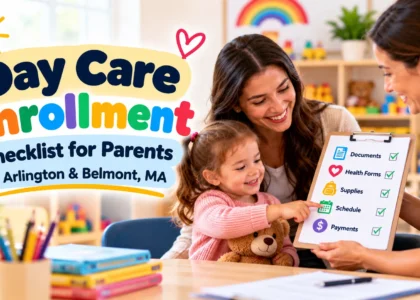
Ask which documents are required. Depending on the program and applicable rules, these may include enrollment forms, emergency contacts, health information, immunization records, authorized pickup details, medication instructions, and relevant permissions.
Also confirm:
- The first day and expected arrival time.
- Drop-off and pickup arrangements.
- What supplies to bring.
- How tuition and deposits are paid.
- The illness and absence policies.
- The procedure for contacting staff.
- How the program will communicate during the adjustment period.
- What happens if your start date needs to change.
Keep copies of the enrollment agreement, handbook, fee schedule, and important communications.
Prepare your child emotionally
Talk about the new routine in an age-appropriate way. Explain who will care for them, what they may do during the day, and when you will return.
If possible, establish a predictable morning routine and allow enough time for a calm goodbye.
Ask the provider whether a transition visit or other introduction is available.
Stay involved after enrollment
Choosing a day care is not a one-time task. Continue communicating with teachers, reviewing updates, and asking questions when your child’s needs change.
If you notice a recurring concern, discuss it early and keep a record of important communications. A respectful partnership between families and educators can help children adjust and thrive.
23. A Complete Safety Checklist for Parents
Use this checklist when researching and visiting child care providers in Arlington or Belmont.
Before the tour
- Identify the type of care and schedule needed.
- Search the Massachusetts Child Care Search directory.
- Review available licensing and compliance information.
- Confirm the provider’s address and age groups.
- Ask whether there is an opening or waitlist.
- Request the parent handbook and fee schedule.
- Prepare questions about your child’s needs.
During the tour
- Observe how staff supervise children.
- Ask about staffing, qualifications, and background checks.
- Review arrival, departure, and authorized pickup procedures.
- Ask about emergency plans and incident reporting.
- Look for obvious hazards in classrooms and play areas.
- Ask about cleaning, hygiene, and illness policies.
- Discuss allergies, medications, and health documentation.
- Ask about safe sleep if considering infant care.
- Observe teacher-child interactions.
- Review meals, naps, outdoor play, and learning activities.
- Ask how staff support children who are distressed.
- Confirm how parents receive updates.
- Review tuition, deposits, and additional charges.
Before enrollment
- Verify any unanswered licensing or safety questions.
- Read the written enrollment agreement.
- Understand the refund and withdrawal policy.
- Confirm the schedule and start date.
- Submit required health and emergency information.
- Confirm authorized pickup arrangements.
- Understand how to contact staff.
- Keep copies of important documents.
After enrollment
- Maintain communication with educators.
- Read updates and policy notices.
- Ask questions when routines or needs change.
- Discuss concerns early.
- Reassess the arrangement if important needs are no longer being met.
24. Frequently Asked Questions About Finding Safe and Caring Day Care in Arlington and Belmont, MA
1. How do I find a safe day care in Arlington, MA?
Start with the Massachusetts Child Care Search directory to identify programs and review available information. Then contact providers, arrange tours, ask about supervision and emergency procedures, and observe how educators interact with children. Verify important details before enrolling.
2. How do I find a safe day care in Belmont, MA?
Use the official Massachusetts child care directory to search Belmont providers. Confirm that the program serves your child’s age group, review available licensing information, visit the setting, and compare safety procedures, staff, communication, schedule, and cost.
3. How can I check whether a day care is licensed in Massachusetts?
Search the Massachusetts Child Care Search tool. If the provider does not appear or you need clarification, contact the appropriate EEC regional licensing office. EEC can provide information about licensing history and relevant restrictions or noncompliance findings.
4. Does a licensed day care guarantee that my child will never be injured?
No. Licensing and compliance checks are important safeguards, but no child care setting can guarantee that injuries or unexpected incidents will never occur. Parents should also assess supervision, the physical environment, staff training, and emergency procedures.
5. What should I look for during a day care tour?
Observe how teachers interact with children, whether supervision appears attentive, whether classrooms and play areas are appropriate, and whether staff answer questions clearly. Ask about licensing, emergency plans, health policies, tuition, and parent communication.
6. What questions should I ask a day care director?
Ask about licensing, staffing, educator qualifications, supervision, emergency procedures, allergies, illness policies, daily routines, communication, tuition, enrollment, and withdrawal terms. Request written policies when details affect safety or cost.
7. How do I know whether day care teachers are qualified?
Ask about education, experience, relevant training, first-aid and CPR coverage, and professional development. You can also ask how the program meets the requirements that apply to its type of care and staff roles.
8. Why are staff-to-child ratios important?
Ratios help determine how supervision is organized. Ask which requirements apply to your child’s age group and program type, how staffing changes throughout the day, and how the provider covers breaks and absences. Consider ratios alongside the actual quality of supervision.
9. What should I ask when choosing infant day care?
Ask about feeding, bottle handling, safe sleep, diaper changes, soothing, hygiene, supervision, emergency procedures, and daily updates. Explain your infant’s routine and ask how the program accommodates individual needs.
10. What should I ask when choosing toddler day care?
Ask how educators manage tantrums, transitions, biting, meals, naps, toilet learning, and separation anxiety. Look for calm, respectful approaches that support toddlers’ development while maintaining close supervision.
11. What should I ask when choosing preschool?
Ask about learning activities, free play, early literacy, social development, outdoor time, staff qualifications, progress updates, inclusion, and kindergarten transitions. Confirm the schedule and whether extended care is available.
12. How do I know whether a day care is emotionally supportive?
Observe whether staff respond to children patiently, listen to them, respect their dignity, and help them manage frustration. Ask how the program supports children who are shy, distressed, or adjusting to a new environment.
13. What safety policies should a day care have?
Ask about emergency procedures, supervision, pickup authorization, injury reporting, health and illness policies, medication, allergies, cleaning, and age-appropriate sleep practices. The provider should be able to explain the procedures relevant to your child.
14. How should a day care handle food allergies?
Ask what documentation is required, how allergy plans are communicated, how exposure risks are reduced, where emergency medication is stored, and which staff are prepared to respond. Confirm that the program can accommodate your child’s specific needs.
15. What should I ask about day care illness policies?
Ask which symptoms require a child to stay home, when a child can return, what happens if symptoms appear during care, and how parents are notified. Review the written policy before enrollment.
16. What should I ask about tuition and additional fees?
Request a written breakdown of tuition, deposits, registration fees, meals, supplies, extended hours, late pickup, holidays, absences, and withdrawal charges. Compare the total cost for equivalent schedules and services.
17. Is a family child care home safer or less safe than a child care center?
Neither setting is automatically safer simply because of its size or type. Evaluate the applicable licensing status, supervision, educator experience, physical environment, emergency plans, and the provider’s ability to meet your child’s needs.
18. What is the difference between day care and preschool?
Day care commonly refers to a child care arrangement that may cover a working day, while preschool typically emphasizes early learning and may follow a shorter or school-based schedule. Some programs combine both. Confirm actual hours and services with each provider.
19. Does Arlington’s Menotomy Preschool provide full-day day care?
Menotomy Preschool offers preschool schedule options, but its official information states that it does not provide before- or after-school child care. Families should review its current new family information and confirm whether its schedule meets their needs.
20. Does Belmont Public Schools offer preschool?
Yes. Belmont Public Schools provides an integrated preschool program with specific eligibility and enrollment arrangements. Review the official Belmont preschool page for current details and confirm whether its schedule fits your family’s needs.
21. How early should I start looking for day care?
Start as early as practical, particularly if you need infant care, a specific schedule, or a particular start date. Availability varies by provider and age group, so contact programs directly and ask about waitlists and enrollment timelines.
22. Should I choose the cheapest day care?
Not based on price alone. Compare safety, supervision, staff, communication, schedules, learning opportunities, and total cost. The right choice is a program that appropriately meets your child’s needs and your family’s circumstances.
23. What are warning signs when visiting a day care?
Potential concerns include unclear licensing status, poor supervision, evasive answers about safety, disrespectful interactions, unexplained fees, and refusal to provide important policies. Investigate serious concerns before enrolling.
24. Can I ask to see inspection reports?
You can ask where inspection or compliance information is available. Massachusetts EEC explains that families may use the child care search system and contact the regional office for information about licensing history, noncompliance findings, or restrictions.
25. How can I prepare my child for day care?
Talk about the new routine in a positive but realistic way, establish predictable mornings, and ask the provider whether transition visits or comfort items are allowed. Maintain communication with educators during the adjustment period.
26. What should I do if I have concerns after enrollment?
Raise the concern with the director or appropriate staff member, describe specific observations, and ask what steps will be taken. Keep a record of important communications. For serious safety or licensing concerns, contact the relevant Massachusetts authority.
27. Are child care financial assistance programs available in Massachusetts?
Massachusetts provides information about child care financial assistance and an online application process. Eligibility and funding availability vary. Check the official state assistance page and MyChildCareMA portal for current guidance.
28. How many day care programs should I visit?
There is no fixed number. Visit enough programs to compare their practices and determine which meets your needs. A few well-evaluated options can be more useful than many rushed tours.
29. Can a day care refuse to enroll my child if they need additional support?
Eligibility and accommodation depend on the program, applicable law, and the child’s specific needs. Discuss the supports required, ask what accommodations the program can provide, and seek guidance from appropriate professionals or agencies if you need help understanding your options.
30. What is the most important factor when choosing day care?
There is no single factor that determines quality. Start with applicable licensing and safety requirements, then assess supervision, relationships, health procedures, communication, suitability for your child, and the family’s schedule and budget.
Conclusion: Choose a Day Care That Puts Safety, Care, and Your Child’s Needs First
Finding a safe and caring day care in Arlington or Belmont, Massachusetts, requires research, observation, and thoughtful questions. A program may look attractive online, but families need to understand what happens during the ordinary moments of the day: how children are supervised, how educators respond to distress, how health concerns are handled, and how parents receive information.
Begin by reviewing the official Massachusetts Child Care Search directory and clarifying any questions about licensing or compliance. Then visit potential programs, observe teacher-child interactions, inspect the environment, and ask about staff training, emergency procedures, allergies, illness, meals, naps, tuition, and communication.
Families in Arlington should distinguish between full-service child care and school-based preschool offerings such as Menotomy Preschool. Families in Belmont should also review the schedule and eligibility requirements of Belmont Public Schools’ integrated preschool before assuming it will meet full-day child care needs.
There is no universal program that is right for every child. The best choice is one that meets applicable requirements, provides appropriate supervision, treats children respectfully, communicates openly with families, and fits your child’s developmental needs and your family’s routine.
Your next step: Make a shortlist, verify available information, schedule tours, and use the safety checklist in this guide to compare each program. Take your time, ask follow-up questions, and make your decision based on evidence and your child’s needs—not on marketing claims alone.