
Choosing the right early learning environment is one of the most important decisions parents make during the first years of their child’s education.
If you are searching for a play school in Arlington, MA, you may have many questions:
- What does a play school actually do?
- What will my child learn?
- Is play-based learning really educational?
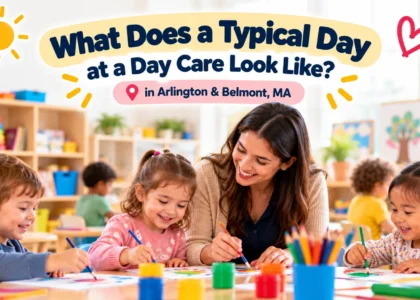
- What does a typical day look like?
- What age should my child start?
- Will my child be prepared for kindergarten?
- How much outdoor play will there be?
- How do teachers handle behavior?
- What should I look for during a school tour?
- How do I compare a play school in Arlington with one in Belmont?
- What should I know about childcare licensing in Massachusetts?
- Should I choose a half-day or full-day program?
- How much does preschool or play school cost?
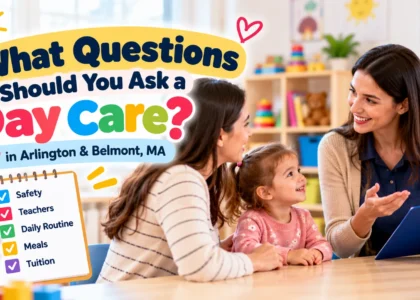
- What questions should I ask before enrolling?
These are all important questions.
A quality play school is much more than a place where children spend a few hours playing with toys. A well-designed early childhood program can provide an environment where children develop language, social skills, emotional awareness, independence, creativity, early academic concepts, motor skills, problem-solving abilities, and confidence.
For families in Arlington, Massachusetts, and nearby communities such as Belmont, MA, understanding what to expect before choosing a program can make the search much easier.
This comprehensive guide explains what parents can expect from a play school, what a typical day may look like, how play-based learning works, what children learn, how teachers support development, what to look for during a tour, what questions to ask, and how to compare programs in Arlington and Belmont.
Quick Summary: What to Expect From a Play School in Arlington, MA
A quality play school in Arlington, MA should provide a safe, nurturing, developmentally appropriate environment where children can learn through a combination of play, exploration, social interaction, teacher-guided activities, movement, creativity, and daily routines.
Parents can generally expect a play-based early learning environment to include:
- Age-appropriate activities
- Guided and independent play
- Storytime
- Early literacy activities
- Early math concepts
- Art and creativity
- Music and movement
- Indoor exploration
- Outdoor play
- Social interaction
- Emotional development
- Teacher-guided learning
- Child-directed choices
- Classroom routines
- Snack and meal periods where applicable
- Rest or quiet time where applicable
- Communication with parents
- Preparation for future school experiences
The exact experience varies by program.
That is why parents should evaluate the actual curriculum, teachers, classroom environment, schedule, safety practices, and educational philosophy rather than relying only on the term “play school.”
Introduction: What Is a Play School?
A play school is generally an early childhood education environment where young children learn through developmentally appropriate play, exploration, social interaction, creativity, movement, and teacher-guided activities.
In the United States, parents may encounter several different terms for similar programs, including:
- Preschool
- Nursery school
- Early learning center
- Early childhood program
- Pre-K
- Play-based preschool
- Child development center
- Childcare center
- Early education program
The terminology can vary.
The most important thing is understanding what actually happens inside the classroom.
A strong play-based program does not simply place toys in a room and allow children to occupy themselves.
Teachers intentionally design the environment and activities to encourage learning.
For example, children might:
- Build with blocks
- Read books
- Create artwork
- Participate in pretend play
- Explore nature
- Sing songs
- Dance
- Complete puzzles
- Sort objects
- Count materials
- Participate in group discussions
- Play outside
- Work together on projects
Each activity can support several areas of development at the same time.
Why Play Is an Important Part of Early Childhood Education
Adults sometimes think of “playing” and “learning” as two different activities.
For young children, they are often closely connected.
When a child builds a tower, they may be learning about:
- Balance
- Height
- Shape
- Size
- Spatial relationships
- Cause and effect
- Planning
- Persistence
When a child participates in pretend play, they may practice:
- Vocabulary
- Conversation
- Imagination
- Cooperation
- Problem-solving
- Social roles
When children play a counting game, they may develop:
- Number recognition
- Counting
- One-to-one correspondence
- Comparison
- Early mathematical reasoning
When children paint, they can develop:
- Fine motor control
- Creativity
- Hand-eye coordination
- Self-expression
This is why parents searching for a play school in Arlington, MA should ask not simply whether children “play,” but how play is used to support development and learning.
What Makes a Play School Different?
A play-based early learning environment generally attempts to make learning active and meaningful.
Instead of expecting young children to sit quietly for long periods, teachers can introduce concepts through:
- Movement
- Games
- Stories
- Hands-on activities
- Conversation
- Construction
- Dramatic play
- Outdoor exploration
- Art
- Music
- Experiments
This approach can make learning feel natural.
A child may not realize that they are practicing mathematics while counting blocks.
They may not realize that they are practicing language while pretending to run a restaurant.
They may not realize that they are developing problem-solving skills while trying to build a bridge.
That is part of the power of play-based learning.
What Will My Child Actually Do at a Play School in Arlington, MA?
The exact schedule varies from program to program.
However, parents can generally expect a combination of structured and flexible activities.
A typical day might include:
- Arrival
- Greeting and transition
- Choice time
- Morning group activity
- Learning centers
- Snack
- Outdoor play
- Storytime
- Small-group activities
- Lunch for full-day programs
- Rest or quiet time
- Afternoon exploration
- Creative activities
- Movement
- Cleanup
- Closing activities
- Pickup
Not every play school follows this exact structure.
Some programs may have shorter schedules.
Others may provide full-day care.
For example, Arlington’s Menotomy Preschool currently lists both half-day and full-day options, and its published sample schedule includes choice time, group activities, math, recess, snack, story, small-group activities, social-emotional learning, lunch, rest, and additional choice/small-group activities.
That provides a useful illustration of how early learning can combine play, structured learning, movement, social development, and routines during the school day.
A Typical Morning at a Play School
Arrival and Greeting
The day may begin with children arriving with their parents or caregivers.
Teachers may greet each child individually.
This seemingly simple interaction can be important.
Children learn:
- How to separate from caregivers
- How to transition into the classroom
- How to greet adults
- How to locate their belongings
- How to begin their daily routine
A predictable arrival routine can help children feel secure.
Choice Time
Choice time gives children opportunities to select activities.
They might choose:
- Blocks
- Books
- Puzzles
- Art
- Dramatic play
- Cars
- Dolls
- Building materials
- Sensory activities
Choice-based activities can support independence.
Teachers can observe what interests children and use those observations to guide future activities.
Morning Circle or Group Time
Many play schools have some form of group meeting.
This could include:
- Greeting songs
- Calendar concepts
- Stories
- Songs
- Movement
- Classroom announcements
- Discussion
- Early math
- Weather observations
- Social-emotional activities
The goal should be developmentally appropriate participation.
Young children generally should not be expected to sit still for long periods.
Learning Centers
Learning centers allow children to explore different areas of the classroom.
A classroom may include:
Reading center
Books and storytelling materials.
Building center
Blocks and construction materials.
Dramatic-play center
Pretend kitchens, stores, doctor’s offices, homes, or community settings.
Art center
Paper, crayons, paint, clay, collage materials, and other creative resources.
Mathematics center
Puzzles, counters, sorting objects, shapes, patterns, and number activities.
Science center
Natural objects, magnifiers, plants, simple experiments, and observation materials.
These areas allow children to learn through direct experience.
Outdoor Play
Outdoor play can be an important component of a play school’s daily routine.
Children may:
- Run
- Jump
- Climb
- Balance
- Throw
- Catch
- Explore
- Dig
- Observe nature
- Play cooperative games
Outdoor learning can also become an extension of classroom learning.
For example, children might collect leaves and later:
- Sort them
- Count them
- Compare sizes
- Draw them
- Talk about colors
- Learn about seasons
A simple outdoor activity can therefore support several learning areas.
Snack Time
Snack time is not only about eating.
It can also be an opportunity for children to practice:
- Handwashing
- Sitting with others
- Communication
- Independence
- Opening containers
- Cleaning up
- Social interaction
Parents should ask individual programs about their food and allergy policies.
Storytime
Books are an important part of early childhood education.
Storytime can support:
- Vocabulary
- Listening
- Imagination
- Memory
- Story comprehension
- Sequencing
- Emotional understanding
- Early literacy
Teachers may ask questions such as:
“What do you think will happen next?”
or:
“Why do you think the character did that?”
These questions encourage children to think beyond simply listening to the story.
Small-Group Learning
Small groups can allow teachers to provide more individualized attention.
Activities might include:
- Letter games
- Counting
- Art
- Science
- Puzzles
- Language activities
- Social-emotional learning
- Fine motor activities
Small groups can be particularly useful when children are at different developmental stages.
Rest and Quiet Time
Children have different sleep needs.
Some younger children may need naps.
Older preschoolers may benefit from quiet time even if they do not sleep.
Parents should ask:
- Is there a nap period?
- How long is it?
- Is rest mandatory?
- What happens if my child does not sleep?
- What materials are used for rest?
Menotomy Preschool, for example, currently describes a short afternoon rest period in its full-day program rather than a traditional nap period.
Policies vary considerably between programs.
What Will My Child Learn at a Play School?
A high-quality play school should support the development of the whole child.
This includes:
- Language
- Literacy
- Mathematics
- Cognitive development
- Social development
- Emotional development
- Physical development
- Creativity
- Independence
Early Literacy Development
Children can begin developing literacy skills long before they can read independently.
A play school may support:
- Listening
- Vocabulary
- Storytelling
- Rhyming
- Letter recognition
- Sound awareness
- Name recognition
- Drawing
- Scribbling
- Early writing
- Book awareness
The objective is to build foundations.
Early Mathematics
Children encounter mathematical concepts throughout the day.
They may learn through:
- Counting
- Sorting
- Matching
- Shapes
- Patterns
- Size
- Measurement
- Quantity
- Number recognition
For example:
“We have four children and four plates. Does everyone have one?”
That is early mathematics in a meaningful context.
Science and Discovery
Young children naturally ask questions.
A play school can turn those questions into learning experiences.
Children might investigate:
- Plants
- Animals
- Water
- Weather
- Shadows
- Light
- Rocks
- Insects
- Magnets
- Seasons
Science does not need to involve complicated experiments.
Observation itself can be powerful.
Social-Emotional Learning
Social-emotional development is one of the most important parts of preschool.
Children learn how to:
- Express feelings
- Listen
- Share
- Take turns
- Cooperate
- Ask for help
- Resolve disagreements
- Understand others
- Follow group expectations
Teachers can help children put emotions into words.
Instead of simply saying:
“Stop being upset.”
a teacher might help the child identify:
“You are frustrated because you wanted the toy.”
This gives children language for their emotions.
Fine Motor Development
Fine motor skills involve small movements of the hands and fingers.
Children can practice them through:
- Drawing
- Painting
- Cutting
- Puzzles
- Building
- Clay
- Beading
- Manipulative toys
- Buttoning
- Writing activities
These skills can later support handwriting and other everyday tasks.
Gross Motor Development
Gross motor activities use larger muscles.
Children may practice:
- Running
- Jumping
- Climbing
- Balancing
- Throwing
- Catching
- Dancing
- Hopping
A good program should provide opportunities for physical movement.
Creativity and Imagination
Creativity should not be limited to an art lesson.
Children can express creativity through:
- Pretend play
- Storytelling
- Music
- Dance
- Building
- Painting
- Drawing
- Dramatic play
- Open-ended materials
Teachers should encourage children to create rather than constantly reproduce predetermined models.
Independence
A play school can help children become more independent.
They may learn to:
- Put away toys
- Manage personal belongings
- Wash hands
- Choose activities
- Ask for help
- Clean up
- Follow routines
- Participate in classroom responsibilities
These skills become increasingly important as children approach kindergarten.
What Teachers Do in a Play-Based Classroom
A common misconception is that teachers simply watch children play.
That is not how intentional play-based education should work.
Teachers can:
- Plan the classroom environment
- Introduce materials
- Observe children
- Ask questions
- Introduce vocabulary
- Encourage cooperation
- Extend children’s ideas
- Support problem-solving
- Guide behavior
- Document development
- Adapt activities
For example, if children are building a bridge, the teacher might ask:
“What could we do to make the bridge stronger?”
That question can encourage:
- Engineering thinking
- Problem-solving
- Communication
- Planning
- Collaboration
Child-Led and Teacher-Guided Learning
A strong program can include both.
Child-led learning
Children select activities and explore their interests.
This can support:
- Independence
- Creativity
- Motivation
- Decision-making
Teacher-guided learning
Teachers introduce specific concepts.
This can support:
- Vocabulary
- Literacy
- Mathematics
- Science
- Social-emotional development
The goal is balance.
What Should Parents Expect From Teachers?
Parents should expect teachers to:
- Treat children respectfully
- Provide clear guidance
- Encourage communication
- Support emotional development
- Maintain safety
- Encourage independence
- Adapt activities to children’s needs
- Communicate important information with families
Teacher-child relationships should be one of the most important things parents evaluate during a tour.
What Does a Play School Classroom Look Like?
When you visit a play school in Arlington, MA, look for an environment that encourages children to explore.
You might see:
- Accessible books
- Blocks
- Art materials
- Dramatic-play areas
- Puzzles
- Manipulatives
- Sensory materials
- Children’s artwork
- Learning displays
- Outdoor equipment
Ask yourself:
Can children actually use these materials independently?
If everything is locked away or out of reach, children may have fewer opportunities for self-directed exploration.
What Should a Daily Schedule Look Like?
There is no universal perfect schedule.
However, a balanced preschool day often includes a mixture of:
| Activity | Developmental Purpose |
|---|---|
| Arrival | Independence and transition |
| Choice time | Decision-making |
| Group time | Communication |
| Storytime | Language and literacy |
| Small groups | Focused learning |
| Outdoor play | Physical development |
| Art | Creativity and fine motor skills |
| Dramatic play | Imagination and social development |
| Snack | Independence and social routines |
| Rest | Regulation and recovery |
| Cleanup | Responsibility |
| Music/movement | Physical and creative development |
Parents should ask for a sample daily schedule before enrolling.
What to Expect During the First Few Days
The first days can be emotional.
Some children enter confidently.
Others may:
- Cry
- Refuse to separate
- Become quiet
- Ask when their parents are returning
- Need additional comfort
- Take time to participate
This does not automatically mean the program is wrong.
Transitions take time.
Teachers should have a thoughtful approach for helping children adjust.
Separation Anxiety at Play School
Separation anxiety is common in early childhood.
Parents can help by:
- Keeping goodbyes predictable
- Avoiding long emotional departures
- Bringing a comfort item if permitted
- Talking positively about school
- Establishing a morning routine
Teachers can help by:
- Greeting the child
- Redirecting them to an engaging activity
- Offering reassurance
- Establishing consistent routines
Ask prospective schools how they handle separation.
How Does a Play School Handle Behavior?
Behavior management is an important topic.
Ask:
“What happens when a child hits, bites, refuses to participate, or has a tantrum?”
A quality program should have a clear, age-appropriate behavior-support approach.
Teachers may:
- Identify the cause of behavior
- Help children use words
- Offer choices
- Redirect
- Set clear boundaries
- Teach alternative behaviors
- Help children calm down
Parents should understand the school’s approach before enrollment.
What If My Child Is Shy?
A shy child may need time to become comfortable.
A good teacher should not force immediate participation.
Instead, the teacher may:
- Allow observation
- Introduce the child gradually
- Pair the child with a supportive peer
- Offer small-group activities
- Build trust
- Encourage without pressure
Ask the school how it supports children who need additional time to warm up.
What If My Child Is Very Active?
Active children benefit from movement opportunities.
Ask about:
- Outdoor play
- Gross motor activities
- Movement breaks
- Classroom layout
- Transitions
- Behavior guidance
A classroom that expects children to sit for extremely long periods may not be appropriate for every young learner.
What If My Child Has Different Developmental Needs?
Every child develops differently.
Parents should ask how the program supports children with different developmental profiles.
Arlington’s Menotomy Preschool is an example of an integrated public program that serves children with and without disabilities in multi-age classrooms and describes individualized instruction and related services such as speech/language, occupational and physical therapy for students with assessed needs.
This is specific to that public program and should not be assumed to describe every preschool in Arlington.
For private providers, parents should ask individually about accommodations, support, referrals, and collaboration with families and professionals.
What to Expect From a Play School in Arlington, MA Regarding Safety
Safety should be a major consideration.
Ask about:
- Secure entry
- Authorized pickup
- Emergency procedures
- Staff training
- First aid
- CPR
- Allergy management
- Medication
- Outdoor supervision
- Illness policies
- Cleaning
- Emergency communication
Massachusetts EEC states that licensed group and school-age childcare programs must meet health, safety, supervision, training, and background-check requirements.
The state also provides an official geographic search tool for licensed childcare programs and notes that families can contact EEC for licensing history, non-compliance findings, or current restrictions.
Understanding Massachusetts Childcare Licensing
If you are evaluating a private childcare or early education program in Massachusetts, licensing is an important part of your research.
The Massachusetts Department of Early Education and Care licenses or approves several categories of child-care programs.
Massachusetts regulations cover areas such as:
- Administration
- Adult-child interactions
- Curriculum
- Progress reports
- Facilities
- Family involvement
- Educator qualifications
- Professional development
- Ratios
- Group sizes
- Supervision
- Health
- Safety
- Nutrition
- Transportation
Parents should nevertheless remember that licensing is only one component of evaluating a program.
You should still tour the facility and ask questions.
How to Check a Childcare Program in Massachusetts
The Massachusetts EEC provides an online geographic search tool for licensed childcare programs.
Families can search by:
- Geographic area
- Program type
The state also explains that some licensed programs may choose not to appear in the search tool and recommends contacting EEC if a program’s licensing status needs confirmation.
This can be a useful step before enrolling.
What to Expect From a Play School in Arlington, MA for Different Ages
Programs have different age requirements.
Some focus on preschool-aged children.
Others serve toddlers and preschoolers.
Some childcare centers serve infants through school-age children.
Therefore, parents should never assume that every “play school” accepts the same ages.
Play School for Toddlers
Toddlers need an environment focused heavily on:
- Safety
- Exploration
- Language
- Movement
- Sensory experiences
- Emotional support
- Predictable routines
- Social interaction
Expect shorter activities and frequent transitions.
Play School for 3-Year-Olds
Three-year-olds may be ready for:
- More group activities
- Pretend play
- Storytelling
- Art
- Early math
- Early literacy
- Outdoor exploration
- Peer interaction
The classroom should still provide plenty of unstructured and child-directed play.
Play School for 4-Year-Olds
Four-year-olds may increasingly work on:
- Early writing
- Letter recognition
- Storytelling
- Counting
- Patterns
- Problem-solving
- Social-emotional skills
- Independence
Kindergarten preparation may become more visible.
Play School for Children Approaching Kindergarten
Children preparing for kindergarten can benefit from practicing:
- Listening
- Following directions
- Managing belongings
- Group participation
- Communication
- Independence
- Early literacy
- Early math
- Emotional regulation
However, kindergarten readiness should not mean replacing play with formal academics.
What to Expect From Play-Based Literacy
Literacy may appear throughout the classroom.
For example:
A pretend restaurant may have menus.
A pretend post office may have envelopes.
A block area may have signs.
A dramatic-play center may contain notebooks.
A teacher may label children’s belongings.
This helps children understand that writing and reading serve real purposes.
What to Expect From Play-Based Math
Math can also appear naturally.
Children may:
- Count blocks
- Sort objects
- Compare sizes
- Make patterns
- Match shapes
- Measure ingredients
- Share materials
- Count children
The teacher’s questions can make these activities more meaningful.
What to Expect From Art
Art should ideally allow children to create rather than simply copy.
Children may use:
- Crayons
- Paint
- Markers
- Clay
- Paper
- Fabric
- Natural materials
- Recycled materials
Parents should look for evidence that children’s own ideas are valued.
What to Expect From Music and Movement
Music can include:
- Singing
- Rhythm
- Instruments
- Movement
- Dance
- Action songs
Music supports more than entertainment.
It can help develop:
- Listening
- Memory
- Coordination
- Language
- Rhythm
- Group participation
What to Expect From Outdoor Learning
Outdoor spaces can become learning environments.
Teachers may encourage children to:
- Observe weather
- Look for insects
- Compare leaves
- Build with natural materials
- Count objects
- Explore shadows
- Talk about seasons
Outdoor play can therefore combine physical development with science and language.
What to Expect From Parent Communication
Parents should understand how the program communicates.
Communication might include:
- Daily reports
- Apps
- Phone calls
- Parent conferences
- Newsletters
- Progress updates
Ask:
“How will I know what my child is learning?”
and:
“How will you tell me if there is a concern?”
What to Expect From Parent-Teacher Conferences
Some programs offer formal conferences.
These can cover:
- Social development
- Language
- Motor development
- Learning interests
- Behavior
- Independence
- Classroom participation
- Areas for growth
Parents should be able to ask questions too.
Arlington Public Schools publishes information about parent-teacher conferences, including conferences associated with Menotomy Preschool.
What to Expect From Meals and Snacks
Policies vary.
Some programs provide food.
Others ask parents to send meals.
Ask about:
- Allergies
- Food restrictions
- Lunch
- Snacks
- Water
- Refrigeration
- Food labeling
- Birthday treats
- Nut policies
Never assume that a program’s food policy is the same as another program’s.
What to Expect From Potty Training
Potty-training policies vary widely.
Some programs accommodate diapers or pull-ups.
Others have age-specific expectations.
Ask:
- Does my child need to be toilet trained?
- Can teachers assist?
- How are accidents handled?
- Are there specific requirements for moving classrooms?
This question is particularly important for younger preschoolers.
What to Expect From a Full-Day Play School
Full-day programs need to balance learning with rest and play.
A full day might include:
- Morning activities
- Outdoor play
- Lunch
- Rest
- Afternoon play
- Creative activities
- Small groups
- Movement
A longer day should not simply mean more formal instruction.
Children need downtime.
What to Expect From a Half-Day Play School
Half-day programs may provide:
- Arrival
- Choice time
- Group activity
- Learning centers
- Outdoor play
- Snack
- Storytime
- Small groups
- Dismissal
This can work well for families who do not need full-day childcare.
Play School vs. Daycare: What Should Parents Expect?
The terms can overlap.
Generally:
Play school/preschool tends to emphasize early education and development.
Daycare/childcare tends to emphasize care and supervision, often with longer hours.
But many daycare centers provide strong preschool curricula.
Massachusetts itself describes licensed group and school-age childcare as including multiple types of early education and care, including center-based care for infants, toddlers, preschoolers, and kindergarten-aged children.
Therefore, compare the actual program rather than relying on the name.
Play School in Arlington vs. Belmont
Families near Arlington and Belmont may reasonably compare programs in both communities.
The decision should consider:
- Home location
- Work location
- Commute
- Schedule
- Tuition
- Availability
- Educational philosophy
- Child’s needs
- Program quality
Belmont Public Schools currently operates a public integrated preschool program serving children ages 3–5, with professional staff including special education teachers and related-service professionals. Its published 2026–2027 information includes program schedules and tuition details.
Because public program eligibility, tuition, and enrollment policies can change, families should always check the current official district information.
Should an Arlington Family Choose a Play School in Belmont?
Possibly.
Location should be considered in relation to the family’s actual routine.
A Belmont program might be practical if:
- You live near Belmont
- You commute through Belmont
- Your workplace is nearby
- The program’s hours fit your schedule
- The educational approach suits your child
- The program has availability
Should a Belmont Family Choose a Play School in Arlington?
Possibly.
Likewise, Arlington may be convenient if:
- You work in Arlington
- You live close to the Arlington border
- The program fits your commute
- You prefer its curriculum
- The schedule is better
- The program has availability
Do not limit your search based solely on city boundaries when private programs allow enrollment from surrounding communities.
What Should Parents Look for During a Play School Tour?
A tour is one of the most valuable parts of your research.
Do not only listen to the director.
Observe the classroom.
25 Questions to Ask a Play School in Arlington, MA
Program
- What ages do you accept?
- What are your hours?
- Do you offer full-day care?
- Do you offer half-day options?
- Are you open year-round?
Curriculum
- What is your educational philosophy?
- How much of the day is play based?
- How do you teach early literacy?
- How do you teach early mathematics?
- How do you support social-emotional development?
Teachers
- What qualifications do teachers have?
- What training do staff receive?
- Are staff trained in CPR and first aid?
- How long do teachers typically stay?
Classroom
- How many children are in each class?
- How many teachers are present?
- Are classrooms mixed age?
- How much outdoor play is provided?
Behavior
- How do you handle tantrums?
- How do you handle biting or hitting?
- How do teachers help children resolve conflicts?
Parent communication
- How do parents receive updates?
- Are conferences offered?
- How do you communicate developmental concerns?
Enrollment
- Is there a waiting list?
What Are Positive Signs During a Tour?
Look for:
- Teachers getting down to children’s level
- Children actively exploring
- Accessible materials
- Children’s artwork
- Books
- Outdoor opportunities
- Calm transitions
- Respectful communication
- Teachers asking children questions
- Children having opportunities to make choices
What Are Potential Warning Signs?
Pay attention if:
- Teachers appear consistently disengaged.
- Children spend long periods waiting.
- Safety questions receive unclear answers.
- The program cannot explain its curriculum.
- Staff seem overwhelmed.
- There are very few hands-on activities.
- Screens appear to dominate the day.
- Children seem consistently distressed.
- Parents are discouraged from asking questions.
One observation should not automatically determine your decision, but repeated concerns deserve further investigation.
How to Choose a Play School in Arlington, MA
Use a structured process.
Step 1: Determine Your Child’s Age
Make sure the program accepts your child’s age.
Step 2: Determine Your Schedule
Decide whether you need:
- Half day
- Full day
- Three days
- Five days
- Before care
- After care
Step 3: Establish Your Budget
Understand the complete cost.
Step 4: Research Programs
Use official sources and direct provider information.
Step 5: Check Licensing Where Applicable
Massachusetts EEC provides a search tool for licensed childcare programs.
Step 6: Tour Programs
Visit your shortlist.
Step 7: Observe Teachers
Watch adult-child interactions.
Step 8: Ask Questions
Do not be afraid to ask detailed questions.
Step 9: Compare
Use a spreadsheet or checklist.
Step 10: Consider Your Child
Think about temperament and individual needs.
Play School Comparison Checklist
| Factor | Program A | Program B | Program C |
|---|---|---|---|
| Location | |||
| Commute | |||
| Age range | |||
| Hours | |||
| Full day | |||
| Half day | |||
| Curriculum | |||
| Play-based learning | |||
| Outdoor play | |||
| Class size | |||
| Teachers | |||
| Licensing | |||
| Meals | |||
| Rest time | |||
| Parent communication | |||
| Tuition | |||
| Extra fees | |||
| Availability | |||
| Overall fit |
Cost Considerations for Play School in Arlington, MA
There is no single universal play school tuition rate.
Costs can depend on:
- Child’s age
- Number of days
- Program length
- Full-day versus half-day
- Meals
- Extended care
- Summer care
- Materials
- Registration fees
Ask for a complete tuition breakdown.
Do not ask only:
“What is your monthly tuition?”
Also ask:
- Is there a registration fee?
- Is there a deposit?
- Are meals included?
- Are supplies included?
- Is extended care extra?
- Are there late pickup fees?
- Is summer care included?
- What happens if we withdraw?
Is the Most Expensive Play School the Best?
No.
Price and quality are not identical.
Parents should compare:
Safety + Teachers + Curriculum + Environment + Communication + Schedule + Cost + Child Fit
A higher tuition may reflect additional services or operating costs, but it does not automatically mean a program is a better fit.
What to Expect When Your Child Starts Making Friends
Friendships can develop gradually.
Some children immediately join groups.
Others watch before participating.
Teachers can help children develop friendships through:
- Cooperative projects
- Partner activities
- Group games
- Dramatic play
- Shared materials
- Outdoor activities
Parents should not worry if their child does not immediately come home with a “best friend.”
Social development takes time.
What to Expect From Kindergarten Preparation
Kindergarten readiness should include more than academic knowledge.
Children can prepare by developing:
Social skills
- Sharing
- Cooperation
- Listening
Emotional skills
- Managing frustration
- Asking for help
- Expressing feelings
Language skills
- Conversation
- Vocabulary
- Storytelling
Physical skills
- Fine motor control
- Gross motor coordination
Independence
- Managing belongings
- Following routines
- Taking care of basic needs
Cognitive skills
- Counting
- Patterns
- Classification
- Problem-solving
Why Independence Matters Before Kindergarten
Parents sometimes focus heavily on letters and numbers.
Independence matters too.
A child who can:
- Put away belongings
- Open a lunch container
- Ask for help
- Follow a routine
- Clean up
- Manage simple personal tasks
may be better prepared for the practical demands of a classroom.
How Parents Can Support Play School Learning at Home
You do not need expensive educational products.
Try:
Reading
Read together every day.
Building
Use blocks or cardboard boxes.
Cooking
Count and measure ingredients.
Nature
Look for leaves, insects, birds, and weather changes.
Pretend play
Play restaurant, store, doctor, post office, or home.
Art
Provide paper, crayons, paint, and open-ended materials.
Conversation
Ask children to explain their ideas.
These activities reinforce classroom learning naturally.
Common Mistakes Parents Make
Choosing Only Based on Location
Convenience matters, but quality matters too.
Choosing Only Based on Tuition
Cost is important, but it should be considered alongside quality.
Looking Only at Academics
Young children need social, emotional, physical, and creative development too.
Not Touring
Online information cannot replace seeing the classroom.
Ignoring Teacher Stability
Ask about staff turnover.
Not Asking About Behavior Policies
Understand how challenging situations are handled.
Assuming Every Preschool Is the Same
Programs can differ dramatically.
Waiting Until the Last Minute
Some programs may have limited availability.
How to Make Your Play School Search Easier
Create three lists.
Must Have
For example:
- Safe environment
- Full-day schedule
- Convenient location
Prefer
For example:
- Outdoor learning
- Small groups
- Strong arts program
Flexible
For example:
- Specific curriculum
- Exact pickup time
- Meal arrangement
This helps prevent small preferences from overwhelming the main decision.
Local Search Strategy for Arlington, MA Parents
When researching a play school in Arlington, MA, parents can search for terms such as:
- Play school in Arlington MA
- Play school Arlington MA
- Preschool Arlington MA
- Preschool near Arlington MA
- Play-based preschool Arlington MA
- Early childhood education Arlington MA
- Early learning Arlington MA
- Nursery school Arlington MA
- Pre-K Arlington MA
- Childcare Arlington MA
- Daycare Arlington MA
For Belmont families:
- Play school Belmont MA
- Preschool Belmont MA
- Preschool near Belmont MA
- Play-based preschool Belmont MA
- Early childhood education Belmont MA
- Childcare Belmont MA
- Daycare Belmont MA
However, parents should not rely exclusively on search rankings.
Check official school-district information, state licensing information, and individual program websites.
Important Arlington, MA Resources for Families
Families researching local preschool options should verify information directly with Arlington Public Schools and individual providers.
Arlington’s Menotomy Preschool currently describes an inclusive, multi-age program serving children from age 3 through kindergarten-entry age, with developmentally appropriate activities designed to support social, language, emotional, cognitive, and motor development.
The program also currently publishes information about its enrollment lottery, schedules, eligibility, tuition, and sample daily routine.
For kindergarten registration, Arlington Public Schools states that students and their parent/guardian must reside in Arlington for district enrollment and provides online registration information.
These details are useful examples of how local programs can have very specific eligibility and scheduling rules.
Private programs can have entirely different requirements.
Important Belmont, MA Considerations
Belmont families also have public and private early-childhood options.
Belmont Public Schools currently describes a preschool program serving children ages 3–5, with a professional team that includes special education teachers, speech/language pathologists, occupational and physical therapists, a school psychologist, and other staff.
Its published information also lists specific 2026–2027 program schedules and tuition, illustrating why parents should verify current information rather than relying on older online articles.
Frequently Asked Questions
1. What should I expect from a play school in Arlington, MA?
You can generally expect a combination of play, exploration, teacher-guided activities, social interaction, early literacy, early mathematics, art, movement, outdoor play, classroom routines, and opportunities for children to develop independence.
2. What is a play school?
A play school is an early childhood learning environment that uses play and exploration as important ways for young children to learn and develop.
3. Is play school the same as preschool?
The terms can overlap. In the United States, preschool is the more common term, while play school often describes a program with a strong emphasis on play-based learning.
4. What age can children attend play school?
Age requirements vary by program. Some programs focus on preschool-aged children, while childcare centers may accept younger toddlers or infants.
5. What does a typical play school day look like?
A typical day may include arrival, choice time, group activities, learning centers, snack, outdoor play, storytime, small-group activities, lunch for full-day programs, rest, creative activities, and dismissal.
6. Do children really learn through play?
Yes. Purposeful play can provide opportunities to develop language, problem-solving, mathematics, social skills, creativity, motor abilities, and emotional development.
7. What does a play school teach?
A quality program can support language, literacy, mathematics, science, social-emotional development, physical development, creativity, independence, and problem-solving.
8. How do I choose a play school in Arlington, MA?
Compare the curriculum, teachers, classroom environment, safety, schedule, licensing where applicable, outdoor opportunities, communication, tuition, location, availability, and fit for your child’s needs.
9. Should I visit a play school before enrolling?
Yes. A tour allows you to observe teachers, children, classroom materials, routines, safety procedures, and the overall environment.
10. What should I ask during a play school tour?
Ask about curriculum, teacher qualifications, class size, teacher-child ratios, daily routine, outdoor play, meals, rest, behavior guidance, safety, communication, tuition, enrollment, and licensing.
11. Does a play school prepare children for kindergarten?
A well-designed early childhood program can help children develop communication, independence, social-emotional skills, early academic foundations, motor skills, and familiarity with classroom routines.
12. Is play-based learning better than traditional academic learning?
There is no universal answer that applies to every child or program. A developmentally appropriate early childhood program should balance learning, play, social interaction, movement, creativity, and age-appropriate academic foundations.
13. How much outdoor play should children receive?
Schedules vary. Ask each provider how outdoor movement and exploration are incorporated into the daily routine.
14. What should a play-based classroom contain?
A classroom may include books, blocks, dramatic-play materials, art supplies, puzzles, manipulatives, sensory materials, science resources, music materials, and opportunities for physical movement.
15. How do play schools handle tantrums?
Teachers should use age-appropriate behavior guidance, clear boundaries, emotional support, redirection, communication, and opportunities for children to learn appropriate ways to express their needs.
16. What if my child is shy?
A supportive program can allow children to observe, warm up gradually, develop relationships, and participate at an appropriate pace.
17. What if my child is very active?
Look for a program with regular movement, outdoor play, appropriate transitions, and opportunities for physical activity.
18. Does Arlington, MA have a public preschool?
Arlington Public Schools currently operates Menotomy Preschool, an integrated program serving children from age 3 through kindergarten-entry age, subject to its eligibility and enrollment requirements.
19. Does Belmont, MA have a public preschool?
Yes. Belmont Public Schools currently operates an integrated preschool program serving children ages 3–5, with specific eligibility and enrollment arrangements.
20. Can Belmont families consider a play school in Arlington?
Private programs may accept families from surrounding communities depending on their policies. Public programs can have specific residency and eligibility requirements, so parents should verify the rules directly.
21. Can Arlington families consider a play school in Belmont?
Families can consider private programs in surrounding communities when permitted by the provider. Commute, schedule, availability, tuition, and program fit should all be evaluated.
22. How much does a play school in Arlington cost?
Costs vary according to the program, child’s age, schedule, number of days, services, and additional fees. Always request current tuition directly from the provider.
23. Are full-day play schools available?
Some programs provide full-day schedules, while others offer part-day programs. Families should check the exact hours of each provider.
24. Do children need to be potty trained?
Requirements vary. Some programs accommodate children who are still toilet training, while others have age-specific toilet-training requirements.
25. How can I verify whether a childcare program is licensed in Massachusetts?
The Massachusetts Department of Early Education and Care provides a geographic search tool for licensed childcare programs and information about licensing history.
26. What are the most important things to look for during a preschool tour?
Focus on teacher-child interactions, safety, classroom organization, children’s engagement, curriculum, outdoor opportunities, communication, cleanliness, schedule, and whether the environment feels appropriate for your child.
27. How early should I start looking for a play school?
Start researching well before you need enrollment. Some programs have limited spaces or specific enrollment windows.
28. Is the closest play school always the best?
No. Location is important, but it should be considered together with educational quality, teachers, safety, schedule, tuition, availability, and your child’s individual needs.
29. Is a play school good for kindergarten readiness?
It can be. A developmentally appropriate program can support the social, emotional, cognitive, language, physical, and independence skills children need as they move toward kindergarten.
30. What makes a good play school?
A strong program generally combines qualified educators, safe and nurturing relationships, developmentally appropriate learning, purposeful play, social interaction, movement, creativity, family communication, and consistent routines.
Final Checklist: What Parents Should Expect
Before enrolling your child, make sure you understand:
Program
- Age requirements
- Schedule
- Calendar
- Curriculum
- Educational philosophy
Classroom
- Group size
- Teacher-child staffing
- Learning centers
- Outdoor space
- Materials
Development
- Literacy
- Mathematics
- Language
- Social-emotional development
- Motor development
- Creativity
- Independence
Safety
- Secure entry
- Pickup procedures
- Emergency plans
- First aid
- CPR
- Allergy policies
- Illness policies
Family
- Communication
- Conferences
- Progress reports
- Parent involvement
Practical
- Tuition
- Registration fees
- Deposits
- Meals
- Rest
- Transportation
- Location
- Availability
Conclusion: What to Expect From a Play School in Arlington, MA
A play school should be much more than a place where children spend time before kindergarten.
A thoughtfully designed play school in Arlington, MA can provide young children with an environment where learning happens through relationships, exploration, movement, creativity, conversation, hands-on activities, and purposeful play.
Parents can expect their child to encounter opportunities to:
- Make friends
- Communicate
- Explore
- Build
- Create
- Move
- Ask questions
- Solve problems
- Develop independence
- Understand emotions
- Practice early literacy
- Explore early mathematics
- Participate in routines
- Become comfortable in a group environment
The exact experience will vary from one program to another.
That is why choosing a play school should involve more than searching Google and selecting the first result.
Visit the school.
Meet the teachers.
Observe the children.
Ask about curriculum.
Understand the daily schedule.
Check safety procedures.
Verify licensing where applicable.
Ask about tuition and additional fees.
Understand the enrollment requirements.
Think about your commute.
And most importantly, consider whether the environment feels right for your child.
For families in Arlington and nearby Belmont, comparing programs across both communities may also make sense when location, eligibility, schedules, and enrollment policies allow it.
A strong early childhood environment can give children something more valuable than early academic memorization.
It can help them develop a positive relationship with learning itself.
When children are encouraged to explore, ask questions, make choices, cooperate with others, try again after mistakes, and discover new ideas, they begin developing skills that can support them well beyond preschool.
The right play school should give children room to be children while intentionally helping them become confident, capable, curious learners.
Play. Explore. Connect. Learn. Grow.
That is what families should look for when choosing a play school in Arlington, MA.