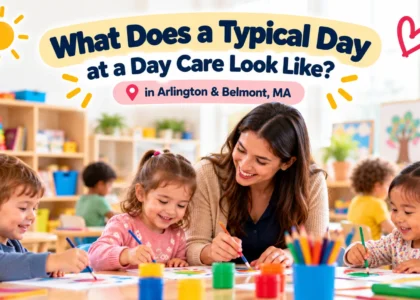


How to Choose the Best Day Care in Belmont, MA for Your Child
Summary
Choosing the right child care is one of the most important decisions a parent can make. A quality day care should do more than provide supervision while parents are working. It should give children a safe, nurturing, engaging environment where they can build relationships, explore their surroundings, develop age-appropriate skills, and feel comfortable throughout the day.
For families searching for day care in Belmont, MA, the decision can involve many factors, including licensing, safety procedures, teacher qualifications, child-to-educator ratios, classroom environments, daily schedules, communication with parents, outdoor activities, meals, nap routines, tuition, and the individual needs of the child.
Families living in nearby Arlington, MA may also want to compare child care programs in both communities. The best location is not necessarily the closest facility. A slightly longer commute may be worthwhile if the program offers a stronger environment, better schedule, appropriate care for your child’s age, and a philosophy that matches your family’s expectations.
Massachusetts’ Department of Early Education and Care (EEC) licenses and regulates different types of child care programs. The state’s official child care search tools can also help families identify licensed programs and investigate licensing information.
The goal of this guide is to help parents make a confident, informed decision when comparing day care in Belmont, MA, as well as child care options serving families in and around Arlington, MA.
Introduction: Finding the Right Day Care for Your Child
For many parents, finding child care is both exciting and stressful.
You want your child to be somewhere safe. You want caring teachers who understand children. You want a clean environment, meaningful activities, reliable communication, and a schedule that works with your family’s routine.
At the same time, every family has different priorities.
One family may need an infant program with flexible drop-off and pick-up times. Another may be looking for a toddler program focused on social development and independence. A family with a preschool-age child may prioritize school readiness, language development, creative activities, and preparation for kindergarten.
That is why choosing the best day care in Belmont, MA should not simply be a matter of selecting the facility with the best online reviews or the shortest distance from home.
Instead, parents should evaluate the entire experience.
A good child care decision considers:
- Safety and licensing
- Staff qualifications
- Teacher-child relationships
- Child-to-staff ratios
- Classroom size
- Cleanliness and hygiene
- Curriculum and learning activities
- Outdoor play
- Meals and nutrition
- Nap and rest routines
- Communication with parents
- Daily schedule
- Tuition and additional fees
- Location and transportation
- Availability and enrollment
- Your child’s personality and developmental stage
- Your family’s schedule and priorities
Massachusetts EEC explains that the best child care program is one that fits the individual child’s temperament, interests, behavior, health, and developmental needs while also matching the family’s philosophy and schedule.
So, instead of asking only, “What is the best daycare in Belmont?”, ask:
“Which child care environment is the best fit for my child and my family?”
That question will lead you toward a much better decision.
Why Choosing the Right Day Care Matters
Young children spend a significant amount of time in their early education and care environments. The quality of those experiences can influence how comfortable they feel, how they interact with others, and how they approach learning and exploration.
A quality day care can provide opportunities for children to:
- Build secure relationships with trusted adults
- Develop social skills
- Practice communication
- Learn through play
- Develop independence
- Explore creativity
- Strengthen motor skills
- Develop early literacy and numeracy skills
- Practice sharing and cooperation
- Learn routines
- Build confidence
- Develop problem-solving skills
However, no two children are exactly alike.
Some children adapt quickly to a new environment. Others need additional time and reassurance. Some children enjoy large group activities, while others thrive in smaller groups.
This is why the “best” program is personal.
A high-quality day care in Belmont, MA should be able to explain how its environment supports children at different developmental stages and how educators respond to individual needs.
What Types of Child Care Are Available?
Before comparing specific programs, understand the major categories of child care.
Massachusetts distinguishes between several types of licensed child care. EEC describes family child care as care provided in a private residence, while group and school-age child care programs generally operate in non-residential settings such as schools or community facilities.
1. Family Child Care
Family child care is typically provided in a provider’s home.
This type of environment may appeal to parents looking for:
- Smaller group sizes
- A home-like atmosphere
- More intimate environments
- Potentially smaller transitions
- A familiar daily setting
Massachusetts EEC states that licensed family child care programs are small in size, with capacity limits depending on the provider’s setup and staffing.
2. Center-Based Day Care
Center-based programs operate in dedicated facilities.
They may provide separate classrooms for:
- Infants
- Toddlers
- Preschoolers
- Pre-kindergarten children
- School-age children
A center-based day care in Belmont, MA may be attractive to families who prefer structured classrooms, multiple educators, dedicated learning areas, and age-specific programming.
3. Infant Care
Infants have very different needs from older children.
Parents should look closely at:
- Feeding procedures
- Diapering
- Safe sleep practices
- Bottle storage
- Communication about naps and feeding
- Staff experience with infants
- Classroom cleanliness
- Individual attention
- Parent updates
- Transition procedures
For infant care, it is particularly important to ask how educators respond when babies have different sleep, feeding, and comfort needs.
4. Toddler Care
Toddlers are becoming increasingly independent while still requiring significant adult supervision.
A strong toddler program should provide opportunities for:
- Movement
- Language development
- Sensory exploration
- Social interaction
- Art and creativity
- Simple problem solving
- Independent routines
- Outdoor play
Parents should also ask how teachers handle common toddler behaviors such as separation anxiety, frustration, biting, hitting, tantrums, and difficulty sharing.
5. Preschool and Pre-Kindergarten Programs
Preschool programs can help children develop skills that prepare them for the next stage of education.
Look for opportunities involving:
- Early literacy
- Early mathematics
- Vocabulary development
- Storytelling
- Science exploration
- Art
- Music
- Movement
- Social-emotional learning
- Self-help skills
- Group activities
The goal should not simply be worksheets or academic drills.
Young children learn through meaningful experiences, relationships, conversation, exploration, movement, and play.
1. Start With Licensing and Regulatory Compliance
One of the first things parents should verify when considering a day care in Belmont, MA is whether the program is properly licensed or approved.
Massachusetts EEC licenses or approves several types of child care programs, including family child care and group and school-age child care programs.
EEC licensing covers important areas involving:
- Health
- Safety
- Supervision
- Staff training
- Background checks
- Child-to-educator ratios
- Program operations
EEC states that licensed group and school-age child care programs must meet health, safety, supervision, and training standards, including requirements related to CPR and First Aid certification, child development training, curriculum implementation, appropriate ratios, and background record checks.
Questions to ask
Before enrolling your child, ask:
- Is the program currently licensed?
- What type of license does it hold?
- Can parents view the licensing information?
- Are there any current restrictions?
- How can parents review the program’s licensing history?
- Does the program have procedures for reporting concerns?
Massachusetts provides a geographic child care search tool that families can use to find licensed child care programs. EEC also states that parents can contact the department to obtain information about a program’s license history, including non-compliance findings and current restrictions.
Important: A polished website, attractive classroom, or large number of reviews should never replace checking licensing and safety information.
2. Evaluate Safety First
Safety should be one of the highest priorities when selecting child care.
During a tour, don’t just look at the classroom decorations.
Look at the actual environment.
Check whether:
- Entry doors appear secure.
- Children are properly supervised.
- Toys are age-appropriate.
- Furniture is stable.
- Floors and walkways are clear.
- Cleaning procedures are visible.
- Outdoor areas are secure.
- Emergency procedures are explained.
- Staff know who is authorized to pick up children.
- Medication policies are clearly defined.
- First-aid procedures are established.
Ask the director:
“What happens if there is an emergency?”
A confident, specific answer is much better than a vague response.
3. Look at the Staff and Teacher Qualifications
Teachers and caregivers have an enormous influence on a child’s day-to-day experience.
Pay attention to how educators interact with children during your visit.
Do they:
- Get down to the child’s level?
- Speak respectfully?
- Listen to children?
- Encourage exploration?
- Respond calmly?
- Help children solve problems?
- Notice children’s emotions?
- Provide individual attention?
A high-quality environment isn’t simply about having educated staff. It is also about having educators who genuinely enjoy working with young children.
Ask about:
- Staff qualifications
- Training
- Experience
- CPR and First Aid certification
- Ongoing professional development
- Staff turnover
- Substitute teachers
- Classroom staffing
Massachusetts EEC identifies educator training and qualifications as part of the requirements for licensed child care programs.
4. Ask About Child-to-Teacher Ratios
A lower child-to-educator ratio can make it easier for educators to provide individual attention, although the appropriate ratio depends on children’s ages and the program’s structure.
Ask:
- How many children are in each classroom?
- How many educators are assigned to that classroom?
- What happens if a teacher is absent?
- Are floaters or substitute teachers available?
- Does the ratio remain consistent throughout the day?
Do not only ask about the advertised ratio.
Ask what the actual classroom looks like during:
- Arrival
- Lunch
- Nap
- Outdoor play
- Bathroom routines
- Pick-up
Those transitions can tell you a lot about how a program operates.
5. Visit the Day Care Before Making a Decision
Never choose a child care program solely from its website.
A visit gives you information that a website cannot.
When touring a day care in Belmont, MA, observe the atmosphere.
Look at the children
Do they seem:
- Comfortable?
- Engaged?
- Curious?
- Relaxed?
- Interested in activities?
Observe educators
Do teachers:
- Smile?
- Communicate respectfully?
- Respond promptly?
- Encourage children?
- Seem overwhelmed?
Observe the environment
Is it:
- Clean?
- Organized?
- Well-lit?
- Age-appropriate?
- Safe?
- Comfortable?
Your first impression matters, but don’t rely on feelings alone. Combine your observations with objective questions.
6. Examine the Learning Environment
A quality early childhood environment should encourage children to learn naturally.
Look for different areas where children can:
- Read
- Build
- Create
- Pretend
- Explore sensory materials
- Draw
- Listen to stories
- Play with peers
- Move
- Rest
A strong classroom doesn’t necessarily need expensive equipment.
Children can learn from simple materials when educators intentionally use them.
For example, building blocks can support:
- Fine motor development
- Spatial awareness
- Problem solving
- Language
- Cooperation
A storybook can support:
- Vocabulary
- Listening
- Imagination
- Communication
- Early literacy
7. Ask About the Curriculum
Parents often hear the word “curriculum” and assume it means academic lessons.
For young children, however, learning can happen through play, conversation, exploration, routines, and social interaction.
Ask:
- What curriculum or educational approach do you use?
- How is learning planned?
- How do teachers adapt activities for different developmental levels?
- How much time is spent on free play?
- How much time is spent outdoors?
- How are literacy and early math skills introduced?
- How do educators support social-emotional development?
A strong curriculum should be developmentally appropriate.
8. Look for a Balance Between Structure and Flexibility
Children benefit from predictable routines.
A typical day might include:
- Arrival
- Free play
- Group activities
- Snack
- Outdoor play
- Learning activities
- Lunch
- Rest or nap
- Afternoon activities
- Snack
- Outdoor or indoor play
- Departure
But children are not robots.
A good program should be structured without becoming unnecessarily rigid.
Ask how teachers handle unexpected situations.
For example:
What happens if a child doesn’t sleep during nap time?
What happens if a child doesn’t want to participate in a group activity?
How do you respond when children become upset?
The answers can reveal the program’s philosophy.
9. Consider Outdoor Play
Outdoor play is an important part of a child’s day.
Ask:
- How often do children go outside?
- Is outdoor play offered every day when weather permits?
- Is there a secure outdoor area?
- What activities are available?
- How does the program handle extreme weather?
- Are outdoor activities age-appropriate?
Children can develop physical, social, and problem-solving skills through outdoor experiences.
Look beyond playground equipment.
A good outdoor environment can also encourage:
- Running
- Climbing
- Balancing
- Imaginative play
- Nature exploration
- Cooperative games
- Observation
- Conversation
10. Understand Meals, Snacks and Allergies
If meals or snacks are provided, ask exactly what is included.
Questions to ask:
- Are meals included in tuition?
- How are menus planned?
- Can parents see the menu?
- How are food allergies handled?
- How are bottles stored?
- Can parents provide food?
- How are dietary restrictions managed?
- How are children supervised during meals?
If your child has an allergy or dietary restriction, discuss it before enrollment rather than assuming the program can accommodate it.
11. Ask About Nap and Rest Time
Sleep routines can vary dramatically between children.
Ask:
- What is the nap schedule?
- Where do children sleep?
- How is the sleep environment monitored?
- What happens if a child doesn’t sleep?
- Can infants follow an individualized sleep routine?
- How are parents informed about naps?
For infants especially, parents should ask detailed questions about safe sleep practices.
12. Evaluate Parent Communication
Good communication between parents and educators builds trust.
Ask how the program communicates:
- Daily updates
- Feeding information
- Nap information
- Diapering information
- Developmental observations
- Photos
- Announcements
- Emergencies
- Schedule changes
Some programs use mobile applications, while others rely on email, written reports, phone calls, or conversations during pickup.
The technology itself is not the most important thing.
What matters is whether parents receive useful and timely information.
13. Ask How the Program Handles Behavior
Behavior management is one of the most important topics parents should discuss before enrollment.
Ask:
“How do you respond when a child hits, bites, pushes, refuses to participate, or has a tantrum?”
Look for approaches based on:
- Calm communication
- Redirection
- Clear expectations
- Emotional support
- Positive reinforcement
- Age-appropriate boundaries
- Teaching problem-solving skills
Be cautious if the program cannot clearly explain its behavior-management philosophy.
14. Consider Your Child’s Personality
The perfect day care for one child may not be ideal for another.
Think about your child’s:
- Personality
- Energy level
- Social comfort
- Communication style
- Independence
- Sensory preferences
- Sleep habits
- Eating habits
- Interests
- Transition style
For example, a child who is slow to warm up may benefit from a calmer environment with strong teacher relationships.
A highly active child may need frequent movement opportunities.
A child who loves stories and creative activities may thrive in a language-rich, play-based environment.
15. Consider Location and Commute
Location matters.
A day care in Belmont, MA may be convenient for families who live or work in Belmont. However, families in nearby areas such as Arlington, MA may want to compare programs across both communities.
When evaluating location, consider:
- Distance from home
- Distance from work
- Morning traffic
- Afternoon traffic
- Parking
- Public transportation
- Backup pickup arrangements
- Emergency accessibility
Don’t choose a program solely because it is five minutes closer.
A reliable program with an environment that fits your child may be worth a slightly longer commute.
Day Care in Belmont, MA vs. Child Care in Arlington, MA
Families living around the Belmont–Arlington area may have several practical options.
When comparing daycare in Belmont, MA with daycare in Arlington, MA, use the same evaluation criteria.
Compare:
| Factor | What to Evaluate |
|---|---|
| Licensing | Current Massachusetts EEC licensing |
| Location | Home/work convenience |
| Safety | Secure and child-friendly environment |
| Staff | Qualifications and experience |
| Ratios | Children per educator |
| Curriculum | Developmentally appropriate learning |
| Outdoor play | Frequency and quality |
| Meals | Nutrition and allergy policies |
| Communication | Parent updates and responsiveness |
| Schedule | Hours and flexibility |
| Tuition | Total annual cost |
| Availability | Current openings and waitlist |
| Philosophy | Fit with your family |
| Child experience | Comfort and engagement |
The objective is not to prove that Belmont is better than Arlington or vice versa.
The goal is to identify the program that best matches your family.
16. Understand Tuition and the Full Cost
Price is an important consideration, but tuition alone doesn’t tell you whether a program is affordable.
Ask for a complete breakdown.
Find out:
- Weekly tuition
- Monthly tuition
- Annual tuition
- Registration fee
- Enrollment fee
- Supply fee
- Meal fee
- Late pickup fee
- Vacation policies
- Holiday policies
- Absence policies
- Payment schedule
- Withdrawal policy
- Refund policy
Ask:
“What will my total cost be during a typical year?”
This prevents unexpected expenses later.
17. Ask About Hours and Scheduling
A day care can be excellent but still not work for your family if the schedule doesn’t match your needs.
Ask about:
- Opening time
- Closing time
- Full-day care
- Part-time care
- Half-day options
- Early drop-off
- Late pickup
- Holiday closures
- Teacher professional-development days
- Vacation closures
- Emergency closures
Also ask what happens if you arrive late.
Late pickup policies can vary considerably between programs.
18. Understand the Enrollment Process
Some high-quality programs may have limited availability.
Ask:
- Is there currently an opening?
- What age groups have availability?
- Is there a waitlist?
- How long is the typical wait?
- Is a deposit required?
- What documents are required?
- When can enrollment begin?
- Can families schedule a second visit before enrolling?
If your child is an infant, start the search early.
19. Ask About Staff Turnover
Staff consistency matters to young children.
Ask:
“How long have the current teachers been working here?”
You can also ask:
- What is the typical staff tenure?
- How frequently do classrooms have staffing changes?
- How are substitute teachers introduced?
- How does the program support new educators?
A program doesn’t need to have zero turnover, but unusually frequent staffing changes may be worth investigating.
20. Review the Program’s Parent Policies
Ask to see written policies covering:
- Illness
- Medication
- Allergies
- Pickup authorization
- Late pickup
- Vacation
- Holidays
- Closures
- Emergencies
- Behavior
- Communication
- Payments
- Withdrawal
- Transportation
- Visitors
- Photography
- Technology
Reading policies before enrollment can prevent disagreements later.
21. Ask About Illness Policies
Young children inevitably get sick.
Ask:
- When must a child stay home?
- When can they return?
- How are parents notified about illness exposure?
- What happens if a child becomes sick during the day?
- Is there a designated area for children waiting to be picked up?
- How are common surfaces cleaned?
The goal isn’t to find a program where children never get sick.
The goal is to find a program with clear procedures.
22. Ask About Emergency Preparedness
Ask what the program does during:
- Fire emergencies
- Severe weather
- Power outages
- Medical emergencies
- Building emergencies
- Missing-child situations
- Other unexpected events
You should understand:
- How parents are contacted
- Where children are taken
- Who is responsible for emergency communication
- How emergency contacts are maintained
A good program should be able to explain its procedures clearly.
23. Check the Cleanliness of the Facility
A child care facility doesn’t need to look like a hospital.
Children naturally make messes.
However, there should be a clear commitment to hygiene.
Look at:
- Bathrooms
- Diaper-changing areas
- Eating areas
- Floors
- Toys
- Sleeping spaces
- High-touch surfaces
- Handwashing areas
Ask how frequently toys and classroom surfaces are cleaned.
24. Look at the Relationship Between Teachers and Children
This is one of the most important things you can observe.
Watch what happens when a child:
- Cries
- Needs help
- Gets frustrated
- Wants attention
- Finishes an activity
- Joins a group
Does the teacher respond with patience?
Does the child appear comfortable approaching the teacher?
A child who feels secure enough to seek help from an educator has an important foundation for learning.
25. Don’t Choose a Day Care Based Only on Online Reviews
Online reviews can be useful, but they are only one piece of the puzzle.
Reviews can tell you about:
- Communication
- Customer service
- Parent experiences
- Common complaints
- Scheduling
- Responsiveness
But reviews don’t tell you everything about:
- Your child’s personality
- Current teachers
- Current classroom dynamics
- Your child’s developmental needs
Use reviews to create questions, not to make the entire decision.
26. Questions to Ask During Your Day Care Tour
Take this list with you when visiting a day care in Belmont, MA.
Safety
- Is the program currently licensed by Massachusetts EEC?
- What safety procedures do you follow?
- How do you handle emergencies?
- How do you control access to the building?
- How do you verify authorized pickups?
Staff
- What qualifications do educators have?
- How long have educators worked here?
- How do you handle staff absences?
- Do staff receive ongoing training?
- Are educators trained in CPR and First Aid?
Children
- How many children are in each classroom?
- How many educators are assigned to each classroom?
- How do you handle separation anxiety?
- How do you handle challenging behavior?
- How do teachers support individual developmental needs?
Curriculum
- What curriculum or educational approach do you use?
- How much free play is included?
- How often do children go outdoors?
- What activities are offered?
- How do you prepare older children for kindergarten?
Daily Routine
- What is a typical day like?
- How are meals handled?
- What is the nap schedule?
- How flexible are routines for individual children?
- What happens if a child doesn’t nap?
Parents
- How do you communicate with parents?
- Do parents receive daily updates?
- How are incidents reported?
- Can parents contact teachers during the day?
- How are developmental concerns communicated?
Cost
- What is the full tuition?
- Are there additional fees?
- What is the registration fee?
- What happens during holidays?
- What happens if my child is absent?
27. Red Flags to Watch For
Parents should also know what warning signs to look for.
Potential red flags include:
1. Unclear licensing information
If a provider avoids answering basic licensing questions, investigate further.
2. High staff turnover
Frequent staffing changes may affect consistency.
3. Teachers appear disengaged
Observe how educators interact with children.
4. Poor cleanliness
Persistent cleanliness issues should not be ignored.
5. Unclear safety procedures
A program should be able to explain emergency policies.
6. No clear behavior-management philosophy
Parents deserve to understand how challenging behavior is handled.
7. Lack of communication
If the program is difficult to communicate with before enrollment, consider how communication may feel afterward.
8. Pressure to enroll immediately
You should have time to ask questions and make an informed decision.
9. Avoidance of parent questions
Transparency is important.
10. Children appear consistently uncomfortable
One observation isn’t enough to judge a program, but repeated concerns deserve attention.
28. What Makes a Great Day Care in Belmont, MA?
The best day care in Belmont, MA is not necessarily the most expensive, largest, or most popular.
A strong program should offer a combination of:
- Safety
- Qualified educators
- Warm relationships
- Appropriate supervision
- Developmentally appropriate activities
- Consistent routines
- Outdoor opportunities
- Clean facilities
- Clear communication
- Family partnership
- Reliable policies
- A positive learning environment
Most importantly, the program should be a good fit for your child.
29. How to Compare Multiple Day Care Programs
If you are considering three or four programs, create a simple comparison system.
Rate each program from 1 to 5 for:
| Category | Rating |
|---|---|
| Safety | /5 |
| Staff | /5 |
| Teacher-child interaction | /5 |
| Learning environment | /5 |
| Curriculum | /5 |
| Outdoor play | /5 |
| Communication | /5 |
| Schedule | /5 |
| Location | /5 |
| Tuition/value | /5 |
| Child’s comfort | /5 |
| Overall fit | /5 |
Don’t simply select the program with the highest numerical score.
Use the score as a tool to organize your thinking.
Your child’s comfort and your trust in the educators should carry significant weight.
30. A Simple Day Care Decision Checklist
Before enrolling your child, make sure you can answer “yes” to the important questions:
- The program’s licensing status has been verified.
- I have visited the facility.
- I am comfortable with the safety procedures.
- I understand the staff qualifications.
- I understand classroom size and staffing.
- I have reviewed the daily schedule.
- I understand the curriculum.
- I know how outdoor play works.
- I understand meals and allergy procedures.
- I understand nap/rest policies.
- I understand illness policies.
- I understand emergency procedures.
- I know how educators communicate with parents.
- I understand tuition and additional fees.
- The schedule works for my family.
- My child seems comfortable in the environment.
- I feel confident communicating with the director and educators.
Day Care in Belmont, MA: What Parents Should Prioritize
When searching for day care in Belmont, MA, prioritize the factors that directly affect your child’s daily experience.
A useful priority order is:
Priority 1: Safety
Nothing is more important.
Priority 2: Caring educators
Children need responsive adults they can trust.
Priority 3: Appropriate supervision
Ask about staffing and classroom structure.
Priority 4: Child development
Look for meaningful learning through play and interaction.
Priority 5: Communication
Parents should know what is happening with their child.
Priority 6: Schedule
The program needs to work for your family’s life.
Priority 7: Cost
Understand the complete financial commitment.
Priority 8: Location
Convenience matters, but it should not override quality and fit.
Finding Child Care Near Arlington, MA
Families searching for child care in Arlington, MA or daycare near Arlington, MA can use the same evaluation process.
The Massachusetts EEC child care search system allows families to search for licensed programs geographically, including programs in Belmont and Arlington.
This is useful for families who live in one community and work in another.
For example, a family living in Arlington but commuting toward Belmont may find that a child care program along their daily route is more practical than choosing a provider immediately next to their home.
When comparing locations, think about your complete daily routine rather than simply measuring distance.
Why Belmont and Arlington Families Should Start Early
Finding child care can take time.
Parents may need to:
- Research programs.
- Check availability.
- Join waitlists.
- Schedule tours.
- Compare tuition.
- Review policies.
- Meet educators.
- Discuss their child’s needs.
- Complete enrollment paperwork.
- Prepare the child for the transition.
For this reason, don’t wait until the week before you need care.
Start researching early, particularly if you need infant care or a specific schedule.
How to Make the Transition Easier for Your Child
Even after choosing a great program, the transition can be challenging.
Children may experience:
- Crying at drop-off
- Separation anxiety
- Changes in sleep
- Changes in eating
- Increased clinginess
- Difficulty adjusting to a new routine
Parents can help by:
Creating a predictable routine
Keep morning routines consistent.
Talking positively about school
Explain what will happen without creating unrealistic expectations.
Visiting beforehand
If possible, let your child become familiar with the environment.
Bringing a comfort item when permitted
A familiar object can sometimes make transitions easier.
Keeping goodbyes calm
Long, emotional goodbyes can sometimes make separation more difficult.
Communicating with educators
Tell teachers about your child’s routines, interests, comfort strategies, and personality.
How Parents Can Build a Strong Relationship With the Day Care
Child care works best when parents and educators work together.
Share important information about:
- Sleep
- Food
- Mood
- New developmental milestones
- Family schedule changes
- Comfort strategies
- Interests
- Concerns
At the same time, listen to the educators.
They observe your child in a different environment and may notice developmental or behavioral patterns that are difficult to see at home.
The Most Important Question: Does My Child Feel Safe and Supported?
After evaluating all the practical details, ask yourself one simple question:
“Can I imagine my child being happy and cared for here?”
Imagine:
- Dropping your child off in the morning
- Leaving for work
- Your child eating lunch
- Playing with other children
- Talking to teachers
- Taking a nap
- Going outside
- Being comforted when upset
- Coming home at the end of the day
If you can picture your child feeling safe, supported, respected, and engaged, you may have found a strong fit.
Frequently Asked Questions About Day Care in Belmont, MA
1. How do I find a good day care in Belmont, MA?
Start by identifying licensed programs, then compare safety, educators, classroom size, curriculum, schedule, communication, tuition, and location. Visit programs in person and observe how educators interact with children. Massachusetts EEC provides a search tool for licensed child care programs.
2. What should I look for when choosing daycare in Belmont MA?
Look for a safe and clean environment, qualified educators, appropriate supervision, positive teacher-child relationships, developmentally appropriate activities, good communication, outdoor play, clear policies, and a schedule that fits your family.
3. Is licensed child care important in Massachusetts?
Yes. Massachusetts EEC licenses and regulates multiple types of child care programs and establishes health, safety, supervision, staffing, training, and background-check requirements.
4. How can I check whether a day care is licensed?
Massachusetts EEC provides a geographic child care search tool for finding licensed programs. EEC also says parents can contact the department for information about a program’s license history, including non-compliance findings and current restrictions.
5. Should I visit a day care before enrolling my child?
Absolutely. A visit allows you to observe the classroom, teachers, children, cleanliness, safety, daily activities, and overall atmosphere.
6. What questions should I ask a daycare director?
Ask about licensing, staff qualifications, child-to-educator ratios, classroom size, curriculum, outdoor activities, meals, naps, illness policies, emergency procedures, communication, tuition, additional fees, and enrollment availability.
7. What is the difference between family child care and center-based care?
Family child care generally operates in a private residence and serves a smaller group of children. Center-based group child care operates in a non-residential facility and may have separate classrooms for different age groups.
8. How much does daycare cost in Belmont, MA?
Daycare tuition varies by provider, child’s age, schedule, program type, and services included. Instead of relying on a general estimate, request a complete tuition and fee schedule from each program you are considering.
9. Should I choose daycare in Belmont or Arlington?
The best choice depends on your family’s needs. Compare programs in both communities based on safety, quality, schedule, commute, availability, cost, and your child’s individual needs.
10. Is a smaller daycare better?
Not necessarily. Smaller programs can provide a more intimate environment, while larger centers may offer multiple classrooms, specialized spaces, and broader resources. The quality of care matters more than size alone.
11. What should I look for in an infant daycare?
Focus especially on safe sleep practices, feeding procedures, diapering, cleanliness, staffing, individual attention, communication, and the educators’ experience with infants.
12. What should I look for in toddler daycare?
Look for opportunities for movement, language development, social interaction, sensory exploration, outdoor play, independence, and age-appropriate behavior support.
13. What should I look for in a preschool program?
Look for developmentally appropriate opportunities involving language, early literacy, mathematics, creativity, science, social-emotional development, movement, and problem solving.
14. How early should I start looking for daycare?
Start as early as possible, particularly if you need infant care, a specific schedule, or a program with limited enrollment. Some programs may have waitlists.
15. What are signs of a high-quality daycare?
Positive signs include warm teacher-child interactions, clear safety procedures, qualified staff, clean classrooms, engaging activities, consistent communication, appropriate supervision, and transparent policies.
16. Should online reviews determine which daycare I choose?
No. Reviews can provide useful information, but they should be combined with an in-person visit, licensing research, conversations with staff, and your own assessment of the program.
17. How important is the daycare’s location?
Location is important because it affects your daily commute and pickup routine. However, quality, safety, staffing, and your child’s comfort should generally carry more weight than a small difference in travel time.
18. What if my child has special dietary requirements?
Discuss dietary requirements and allergies with the provider before enrollment. Ask how meals are prepared, how food allergies are documented, and how educators prevent accidental exposure.
19. What if my child has separation anxiety?
Talk to the educators about your child’s temperament and establish a consistent drop-off routine. A strong relationship between the child, family, and educators can make the transition easier.
20. What is the biggest mistake parents make when choosing daycare?
One common mistake is focusing too heavily on one factor—such as price, distance, or online reviews—instead of evaluating the complete program.
Final Checklist for Choosing the Best Day Care in Belmont, MA
Before making your final decision, compare each program across these categories:
Safety
- Licensing verified
- Secure facility
- Emergency procedures
- Safe outdoor space
- Appropriate supervision
Staff
- Qualified educators
- Relevant training
- CPR/First Aid preparedness
- Stable staffing
- Positive interactions
Learning
- Developmentally appropriate curriculum
- Play-based learning
- Language development
- Creative activities
- Outdoor exploration
Daily Care
- Meals
- Snacks
- Allergies
- Nap routines
- Hygiene
- Diapering/toileting
Family Communication
- Daily updates
- Parent meetings
- Incident communication
- Developmental updates
- Accessible staff
Practical Considerations
- Location
- Hours
- Tuition
- Additional fees
- Availability
- Waitlist
- Vacation policy
- Holiday closures
Child Fit
- Comfortable environment
- Appropriate stimulation
- Supportive teachers
- Suitable classroom size
- Individual attention
Conclusion: Choosing the Right Day Care for Your Family
Choosing the best day care in Belmont, MA is not about finding a program that looks perfect on paper.
It is about finding an environment where your child can feel safe, respected, supported, engaged, and cared for every day.
Start with licensing and safety. Then evaluate educators, classroom environments, curriculum, routines, communication, outdoor play, meals, tuition, schedule, and location.
Most importantly, visit the programs.
Talk to the director.
Observe the educators.
Watch how children interact with the adults around them.
Ask difficult questions.
Read the policies.
Compare your options.
And trust your observations.
For families considering child care in Belmont, MA and daycare in Arlington, MA, Massachusetts EEC resources can provide an important starting point for identifying licensed programs and understanding licensing information.
The right day care should not simply make your work schedule possible. It should become a place where your child has opportunities to learn, play, build relationships, develop independence, and feel a sense of belonging.
Ultimately, the best child care choice is the one that brings together safety, quality, nurturing relationships, developmentally appropriate learning, reliable communication, and a strong fit for your child and family.
If a program meets those standards—and you feel confident leaving your child there—you may have found the right place.